Best Retro Football Shirts: 15 Most Iconic Kits Ever
Holland 88, Denmark 86, the Bruised Banana: 15 iconic retro football kits ranked with the real season, maker and sponsor, plus how to spot a fake.

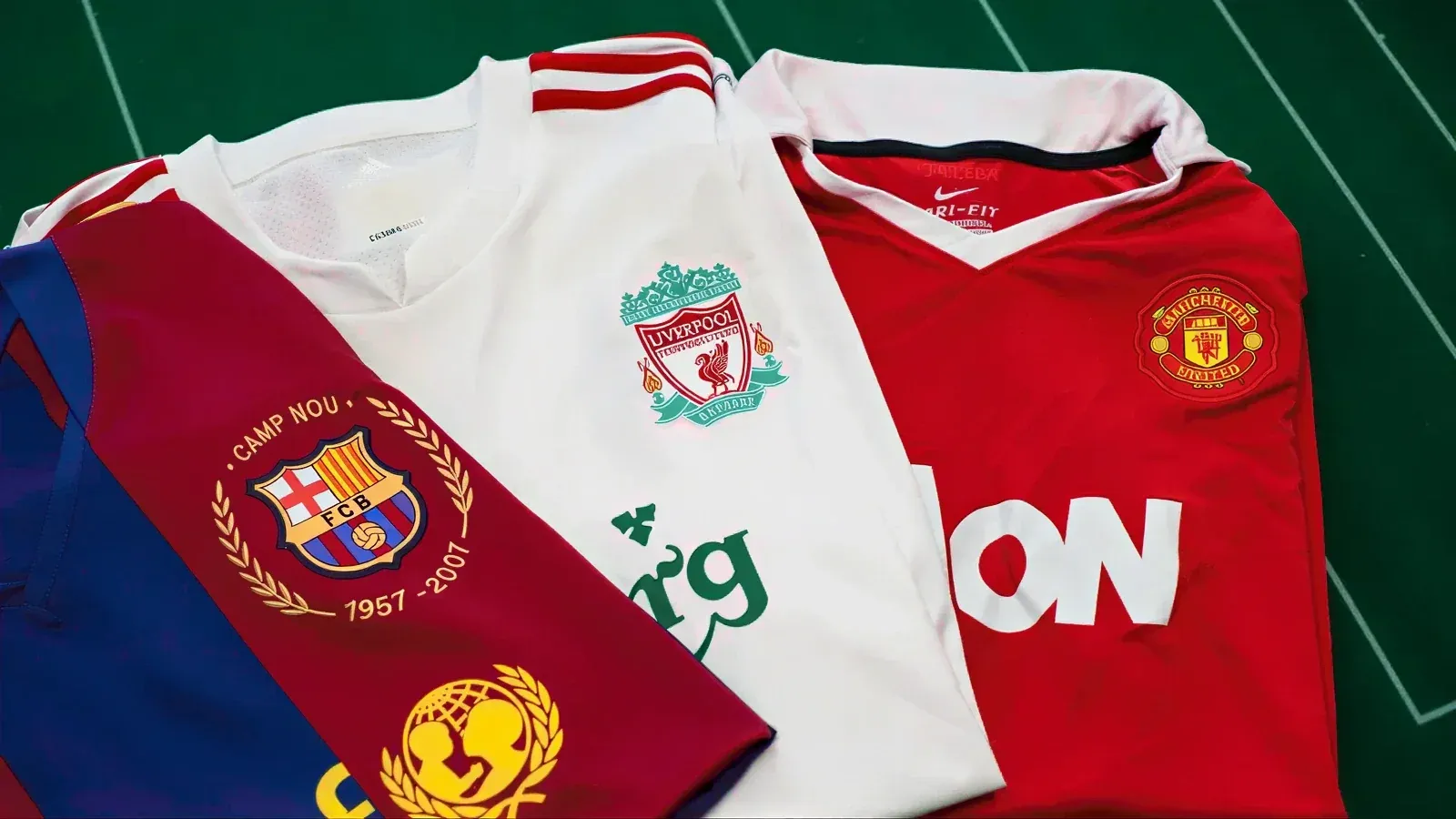
The best retro football shirts of all time start with the Netherlands' orange adidas shirt from Euro 1988 and Denmark's half-and-half Hummel shirt from the 1986 World Cup, the two designs FourFourTwo put first and second in its 2023 ranking of the greatest football shirts. Below you will find our 15 most iconic football kits, club and national team, each with the correct season, manufacturer and sponsor, the design detail that makes it stand out and the moment that made it famous.
Retro kits have never been more popular. Clubs and manufacturers now reissue their classics every year, and in 2026 adidas even brought its old Trefoil logo back to World Cup kits. That also means more fakes and more confusion about what is an original, what is an official remake and what is just "inspired by". So after the list, we explain what makes a kit retro, how to tell an original from a remake, and which retro releases came out in 2026. Everything here is up to date as of November 2026.
What makes a football kit "retro"?
There is no official definition, but collectors and shops generally use four categories, and it helps to know which one you are looking at:
- Vintage or original: a shirt made at the time, for the season it was designed for. A genuine 1988 Netherlands shirt was made in 1988.
- Official reissue or remake: a modern copy of an old design, made under licence by the club or by the original manufacturer. Examples are adidas' Bruised Banana reissue for Arsenal in 2019 or Hummel's Denmark 86 relaunch in 2023.
- Retro-inspired: a brand new kit that borrows ideas from an old one, such as Newcastle's 2024-25 adidas away shirt, which was inspired by the 1995-96 away.
- Fake: an unlicensed copy sold as an original or as an official product.
Most of the shirts people call "retro" today come from the late 1970s to the late 1990s. That was the era when kit makers started to put their logos on shirts, shirt sponsors arrived, and new printing techniques let designers use patterns that would have been impossible on older cotton jerseys.
Why retro football shirts are still so popular
- Nostalgia: a shirt takes you straight back to a moment. Van Basten's volley in the Euro 88 final, Maradona's Napoli, Cantona's upturned collar. Wearing it is a way of reliving that memory.
- Design: many older kits took risks that modern template designs rarely do, with bold geometric prints, half-and-half bodies and loud colours.
- Fashion: retro shirts moved from the terraces to the street years ago and are now part of everyday casual wear, worn at gigs and festivals as much as at matches.
- Collecting: genuine match-era shirts are getting rarer, and some original classics sell for far more than they cost when new.
The 15 best retro football kits of all time
Our ranking mixes three things: how influential the design was, the moment the shirt is tied to, and how much fans still want it today. Here is the list, from number one to number fifteen.
1. Netherlands home, Euro 1988 (adidas)
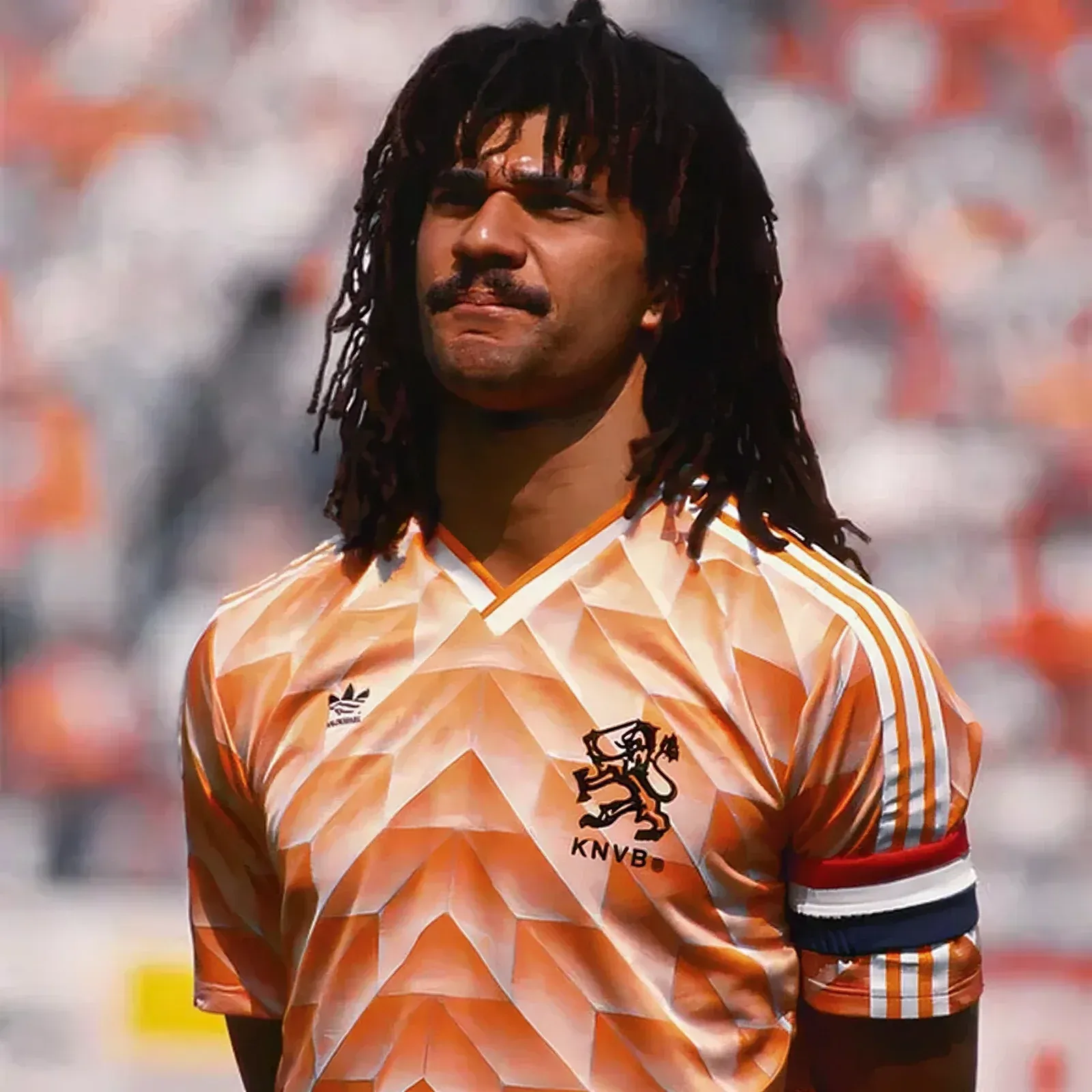
When people say "retro kit", this is the shirt many of them picture. Adidas covered the orange body in a geometric pattern of lighter and darker orange triangles, with a white V-neck and white three stripes on the sleeves. Nobody had seen anything like it on a national team at a major tournament, and collectors often describe it as the forerunner of the bold designs of the 1990s.
The Netherlands wore it to win Euro 88 in West Germany. In the final in Munich on 25 June 1988, captain Ruud Gullit headed the first goal and Marco van Basten scored his famous volley from a tight angle in a 2-0 win over the Soviet Union. As of November 2026, it is still the only major tournament the Netherlands have won, which is a big part of why this shirt matters so much to Dutch fans.
Why it is iconic: it combines a ground-breaking design with one of the best goals ever scored in a final. FourFourTwo ranked it the greatest football shirt of all time in December 2023.
2. Denmark, 1986 World Cup (Hummel)
Hummel's Denmark shirt for Mexico 86 split the body in two: one half thin red and white pinstripes, the other half plain, with Hummel's trademark chevrons running down the sleeves. Denmark wore it in two versions, a mostly red one (the one in the photo below) and a mostly white one. According to Vice, FIFA was initially worried that the thin stripes would cause problems on television and approved the kit only on the condition that the shorts were plain.
The team became known as "Danish Dynamite". In Mexico they won all three group matches, against Scotland, Uruguay (6-1) and West Germany, before losing 5-1 to Spain in the round of 16. At home, the shirt divided opinion at first, and Danish cartoonists mocked it, but it has since become one of the most collected shirts in the world. Hummel relaunched it in 2023, and Denmark wore the remake against Northern Ireland in a Euro 2024 qualifier in Copenhagen on 16 June 2023.
Why it is iconic: no national team shirt before it looked like this, and FourFourTwo ranked it second of all time in 2023.

3. West Germany home, 1990 World Cup (adidas)
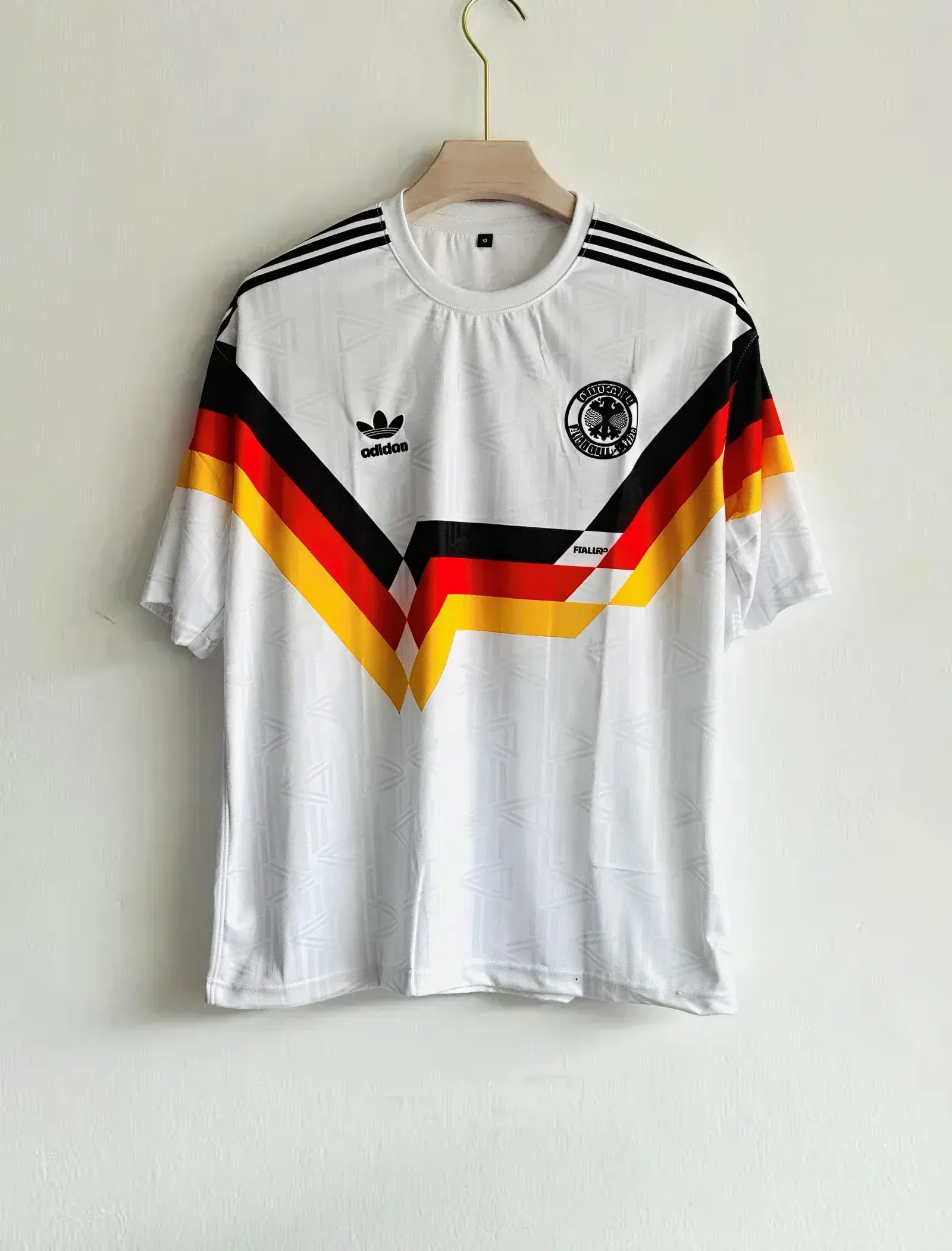
A white shirt with a sharp band of black, red and gold that zigzags across the chest and shoulders. Adidas introduced it in 1988 and West Germany wore it until 1991, but it will always be the Italia 90 shirt. Lothar Matthäus captained the team to the World Cup, won 1-0 against Argentina in Rome on 8 July 1990 with a late Andreas Brehme penalty. It was West Germany's third world title.
Why it is iconic: it looks modern even today, and fan rankings regularly put it near the top. By late May 2026, adidas had reissued the green 1990 away version as part of its World Cup "Bringback" collection, one of the last retro releases before the German federation switches to Nike in 2027.
4. Arsenal away, 1991-93 "Bruised Banana" (adidas, JVC)
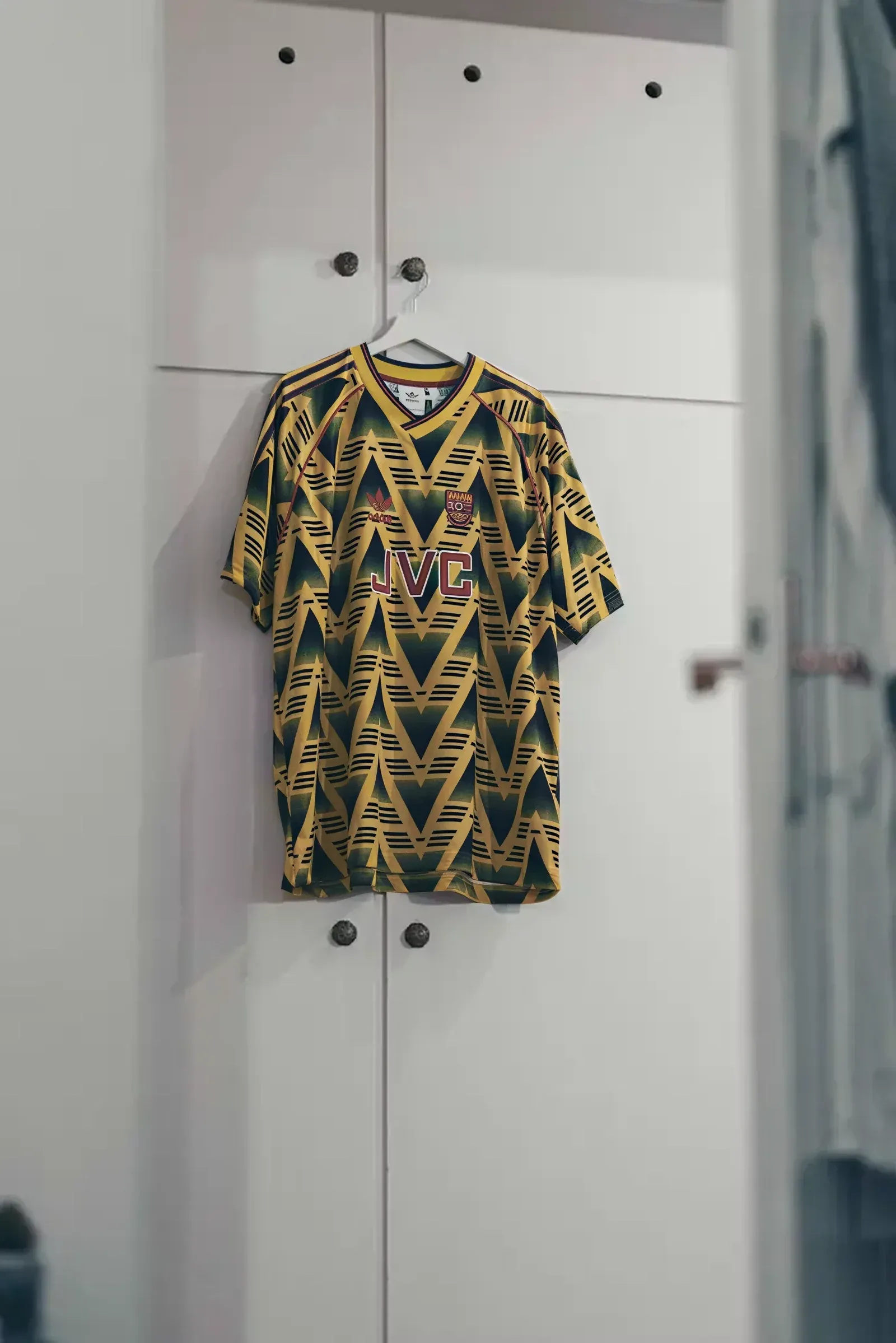
Adidas gave Arsenal a yellow away shirt covered in dark navy and green zigzag blocks in the summer of 1991, with JVC across the chest. Somebody called it the "Bruised Banana", and the insult became its name. It was used for two seasons, including the first Premier League season in 1992-93, and Ian Wright wore it when he scored a hat-trick on his league debut at Southampton in September 1991.
Why it is iconic: it went from being mocked to being one of the most loved shirts in Arsenal's history. Adidas reissued it in 2019, JVC logo included, and FourFourTwo placed it eighth in its 2023 ranking.
5. Cameroon home, 1990 World Cup (adidas)
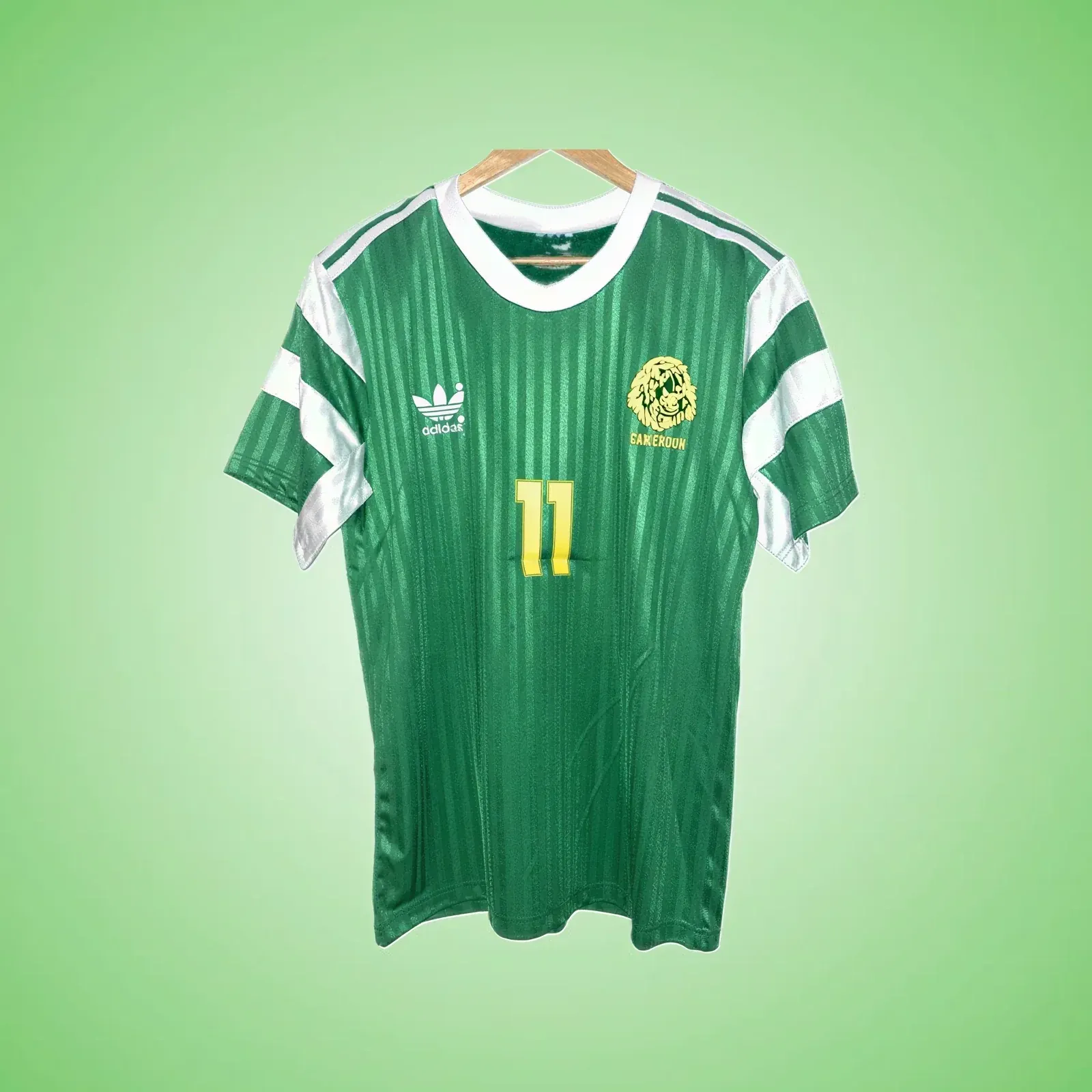
A green adidas shirt with white trim and a yellow lion on the chest, worn with red shorts. Cameroon's story at Italia 90 is one of the greatest in World Cup history. In the opening match in Milan on 8 June 1990, they beat holders Argentina, with Diego Maradona, 1-0 through François Omam-Biyik's header. Roger Milla, aged 38, scored four goals, mostly as a substitute, and celebrated them by dancing at the corner flag. Cameroon became the first African team to reach a World Cup quarter-final, where they lost 3-2 to England after extra time.
Why it is iconic: it stands for the moment African football announced itself at the World Cup. Collectors want it for the story as much as for the design.
6. France home, 1998 World Cup (adidas)
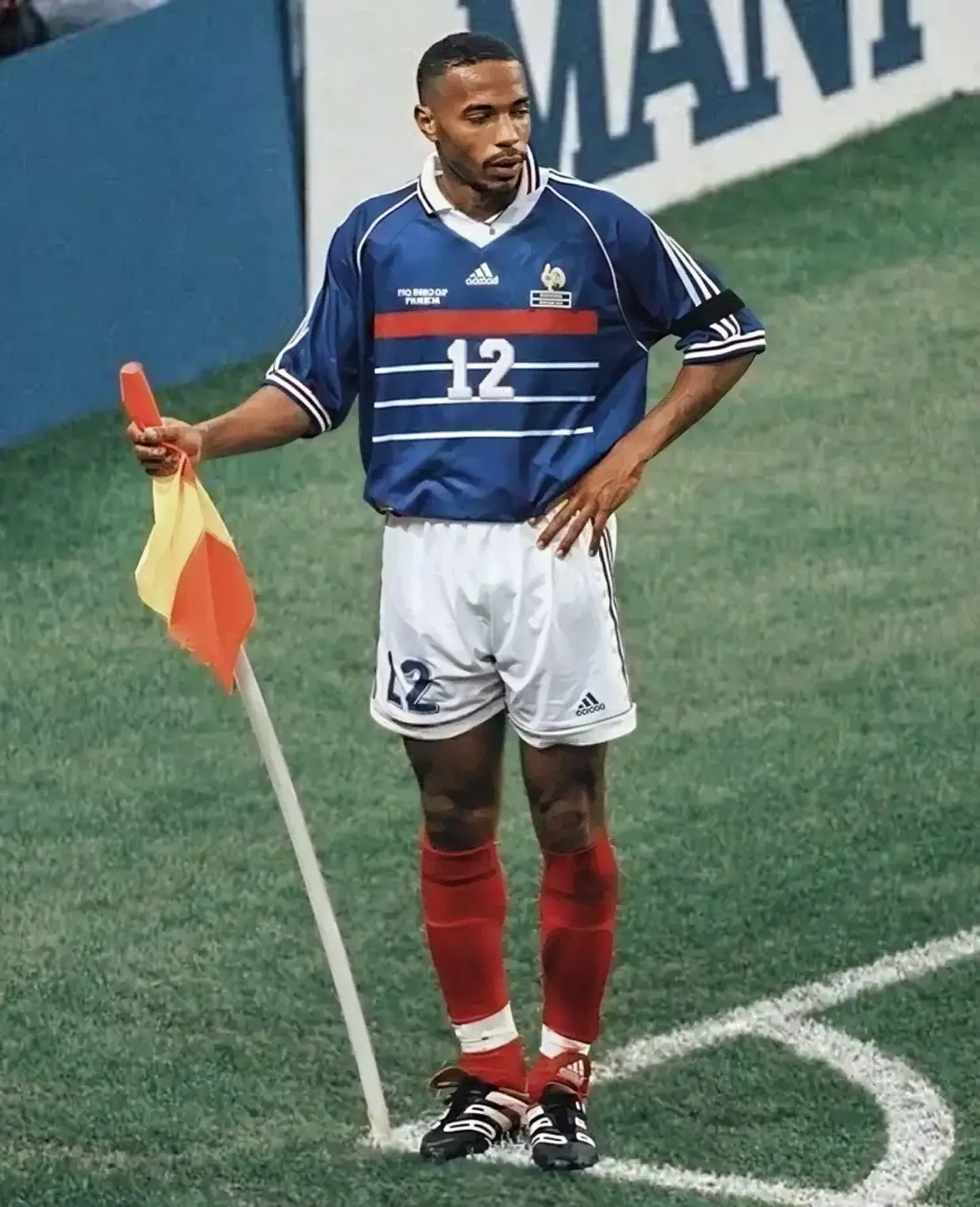
Royal blue, with a red band and thin white stripes across the chest, the adidas logo in the centre and "FIFA World Cup France 98" printed next to it. On 12 July 1998, at the Stade de France, Zinedine Zidane scored two headers in a 3-0 win over Brazil in the final and France won their first World Cup at home.
Why it is iconic: for French fans it is the shirt of their first World Cup, worn by Zidane, Deschamps, Thuram, Henry and the rest of a generation. It is not the most elaborate design on this list, but it may be the one most tied to a whole country's memory.
7. AC Milan home, 1989-90 (Kappa, Mediolanum)
The classic red and black stripes, with a black collar, the Kappa logo and Mediolanum across the chest. This was the shirt of Arrigo Sacchi's Milan and its Dutch trio, Gullit, Rijkaard and Van Basten. Milan won the European Cup in 1989, beating Steaua Bucharest 4-0 in Barcelona, and kept it in 1990, beating Benfica 1-0 in Vienna with a Frank Rijkaard goal. It was also the last season of Kappa's deal: adidas took over in 1990.
Why it is iconic: it represents one of the greatest club sides ever assembled. If you want to see where that Milan team sits among the best sides in the game today, read our ranking of the best football teams in the world.
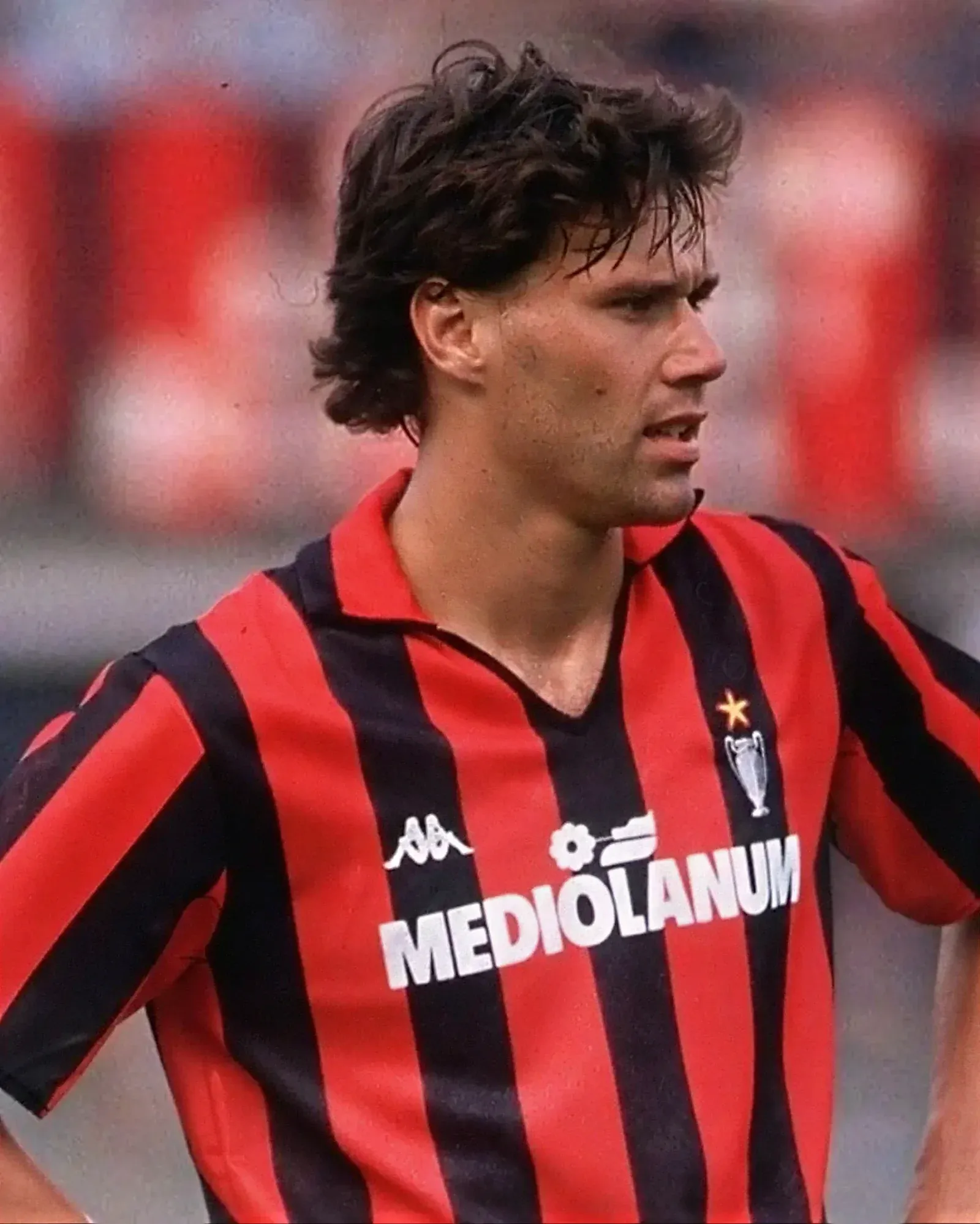
8. Napoli home, 1988-90 (Ennerre, Mars)
Sky blue, simple, with the NR logo of Italian maker Ennerre. Napoli's shirts of the Maradona years are among the most wanted in the world, and the late 1980s version with Mars as sponsor covers the club's best run: the UEFA Cup in 1989, won against Stuttgart, and the second Serie A title in 1990. When Napoli won their first scudetto in 1987, the sponsor on the front was the pasta maker Buitoni.
Why it is iconic: it is not just a kit, it is Maradona. Napoli fans still treat these shirts almost like relics, and they sell to collectors far beyond Naples.

9. Barcelona home, 1991-92 (Meyba)
Many lists say this shirt was made by Kappa. It was not: Spanish brand Meyba made Barcelona's kits from 1982 to 1992, and Kappa only took over for the 1992-93 season. The 1991-92 home shirt has blue and red (blaugrana) stripes, a blue collar and, as was usual for Barça at the time, no sponsor on the front.
This was the shirt of Johan Cruyff's "Dream Team". There is a twist, though: in the European Cup final at Wembley on 20 May 1992, Barcelona beat Sampdoria 1-0 after extra time, with a Ronald Koeman free kick, while wearing their orange away kit. The players then changed into their blaugrana home shirts to lift the club's first European Cup.
Why it is iconic: it is tied to the team that changed Barcelona forever. Meyba reissued the 1991-92 home shirt in 2018.
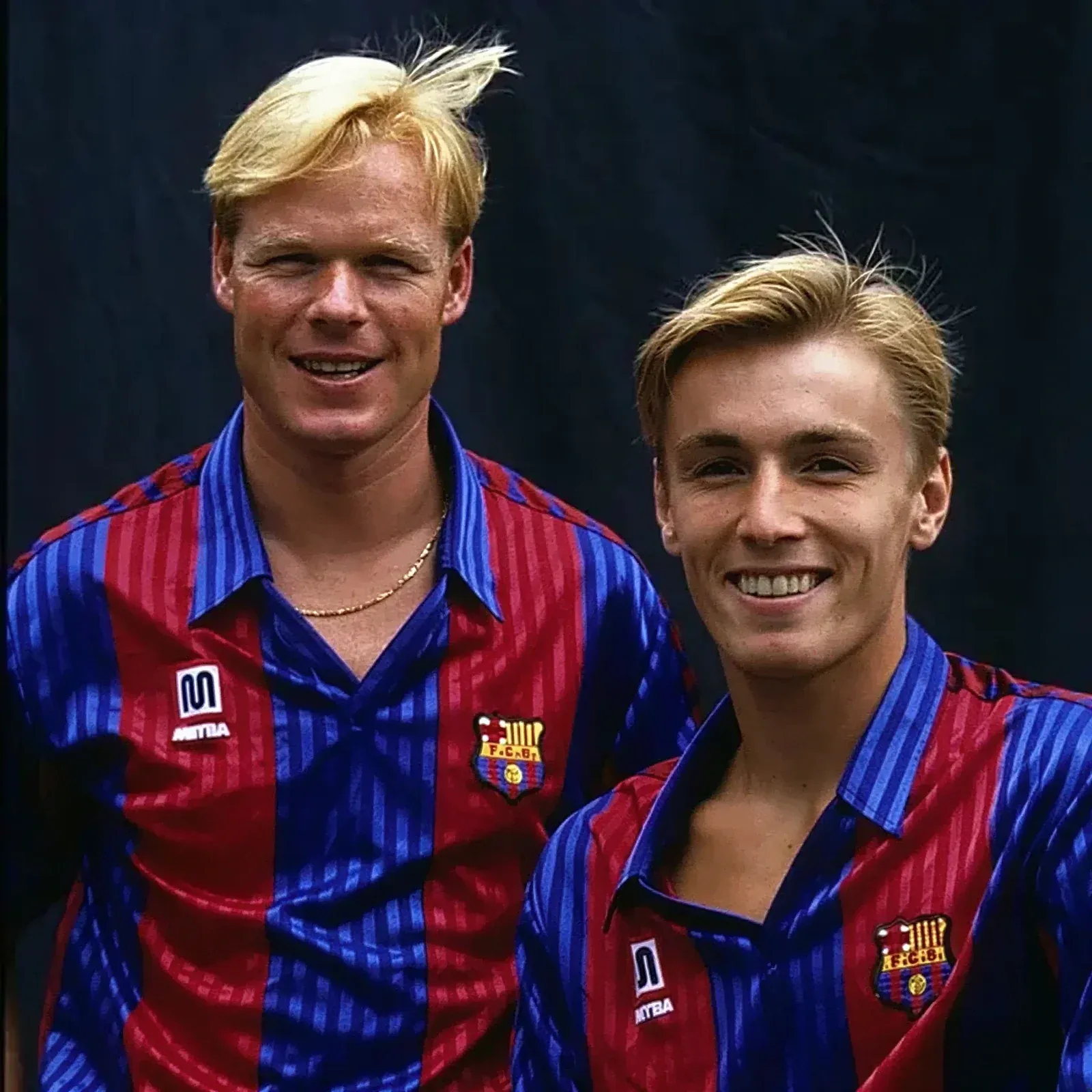
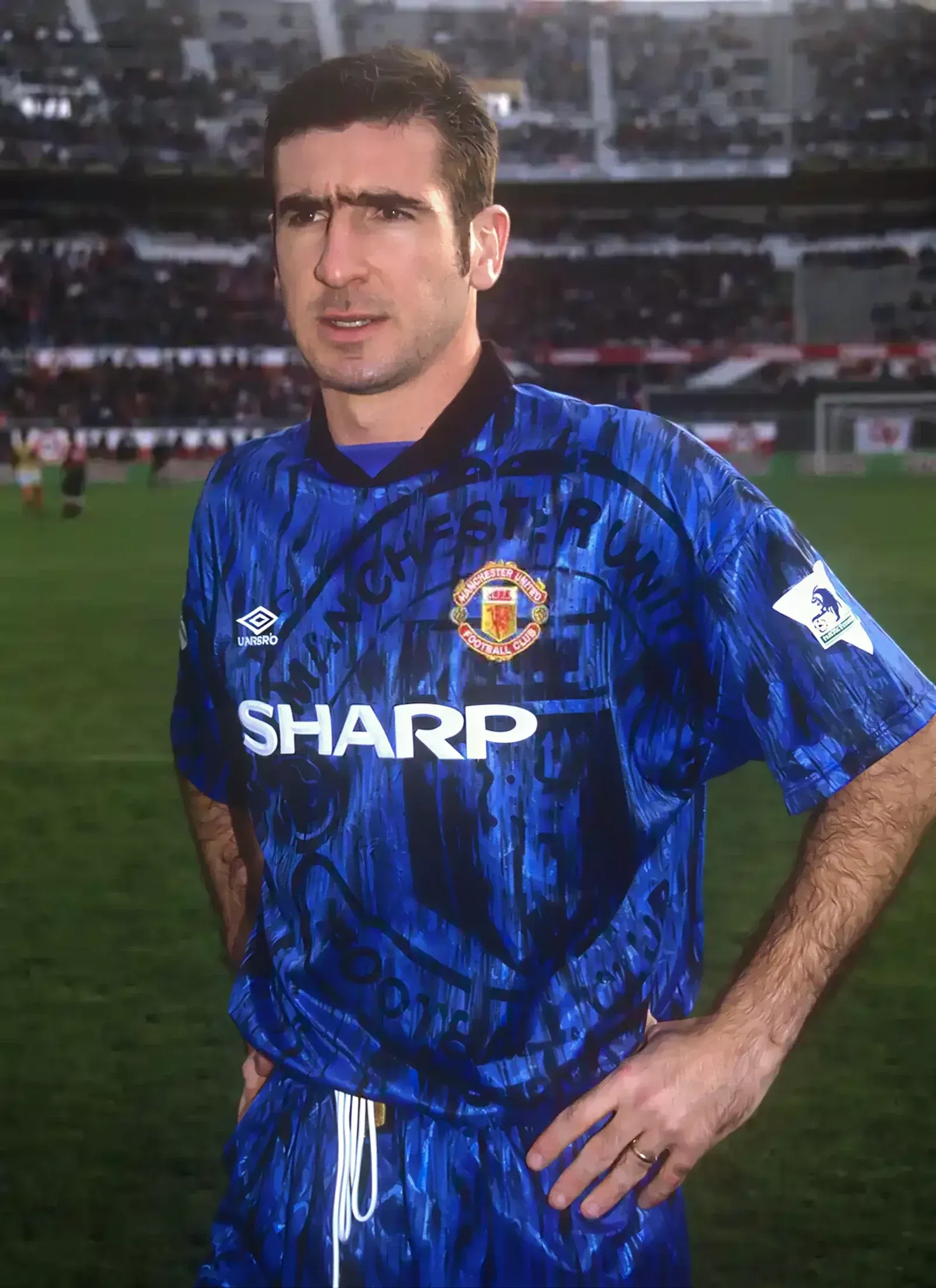
10. Manchester United away, 1992-93 (Umbro, Sharp)
Many lists call this the "snowflake" shirt, but that nickname belongs to a different one: the blue and white adidas away shirt of 1990-92. The 1992-93 away is the first one Umbro made for United after taking over from adidas, a blue shirt with a black collar and a darker pattern that repeats the club's name and crest, with Sharp as sponsor. Eric Cantona, signed from Leeds in November 1992, wore it in the season United won their first league title in 26 years.
Why it is iconic: it is a strange, dark, busy design, and it belongs to the season that started United's Premier League dynasty. The other blue away, the 1990-92 adidas "snowflake", came back in April 2026 as part of the official adidas and Manchester United Bringback collection.
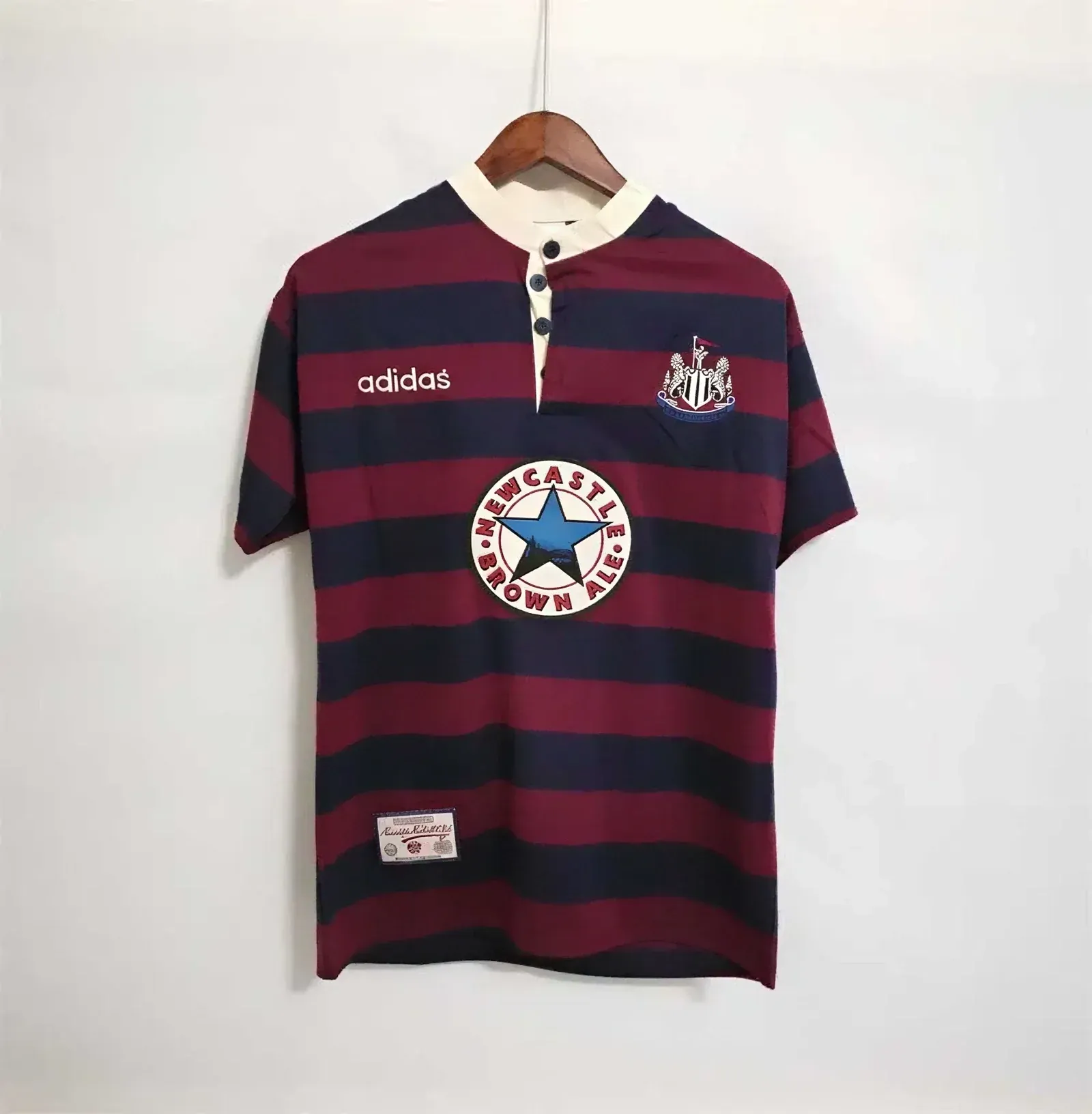
11. Newcastle United away, 1995-96 (adidas, Newcastle Brown Ale)
Claret and navy hoops, a cream grandad collar with buttons and the round blue star of the Newcastle Brown Ale logo. This was the away shirt of Kevin Keegan's "Entertainers" in 1995-96, the season Newcastle led the Premier League by 12 points before Manchester United overtook them.
Why it is iconic: it looks more like a fashion piece than a football shirt, which is why fans wear it far from St James' Park. Adidas, Newcastle's kit maker again since 2024, used it as the inspiration for the 2024-25 away shirt and then released a remake of the 1995-96 original in January 2026. For more on famous chest logos like this one, see our guide to the best shirt sponsors in Premier League history.
12. Paris Saint-Germain "Hechter" home (since 1973)
PSG's most famous design is not from 1992, as some lists claim. The navy shirt with a wide red vertical band edged in white was created by Parisian fashion designer Daniel Hechter, who was then running the club, and PSG wore it for the first time in 1973. According to the club, Hechter was inspired by the look of a Ford Mustang. Historian Michel Kollar, quoted on the club's website, calls it by far the most symbolic of PSG's shirts.
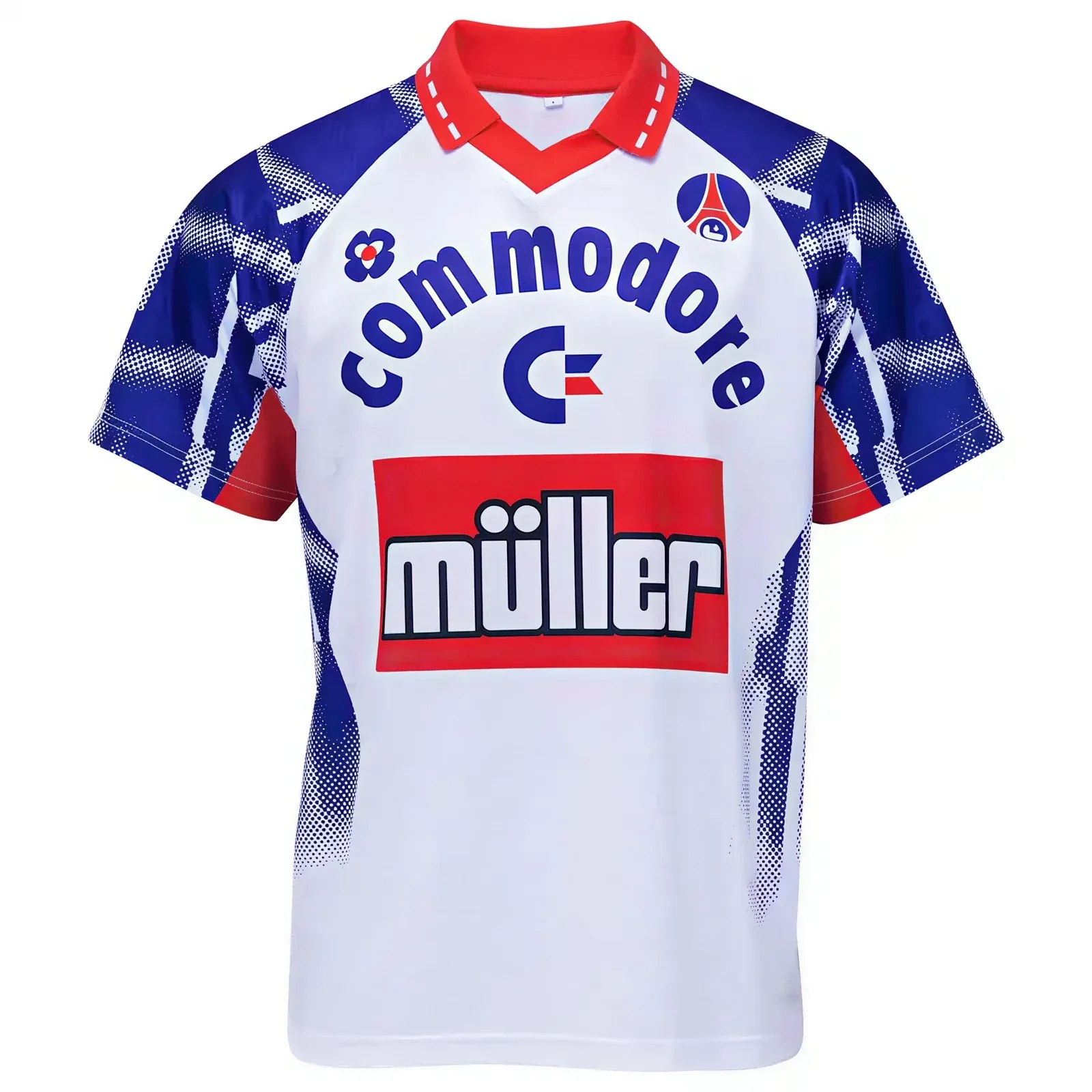
The design has come back again and again. In 1991-92, for example, PSG's Nike home shirt was still the Hechter layout, with Commodore and Müller as sponsors. In the early 1990s PSG also wore white shirts, like the one below, and in 2022 the club re-released several of its Commodore-era shirts in a heritage range.
Why it is iconic: it is fashion as much as football, and it gave PSG an identity that has outlived every sponsor and every kit maker.
13. Wales home, 1976-79 (Admiral)
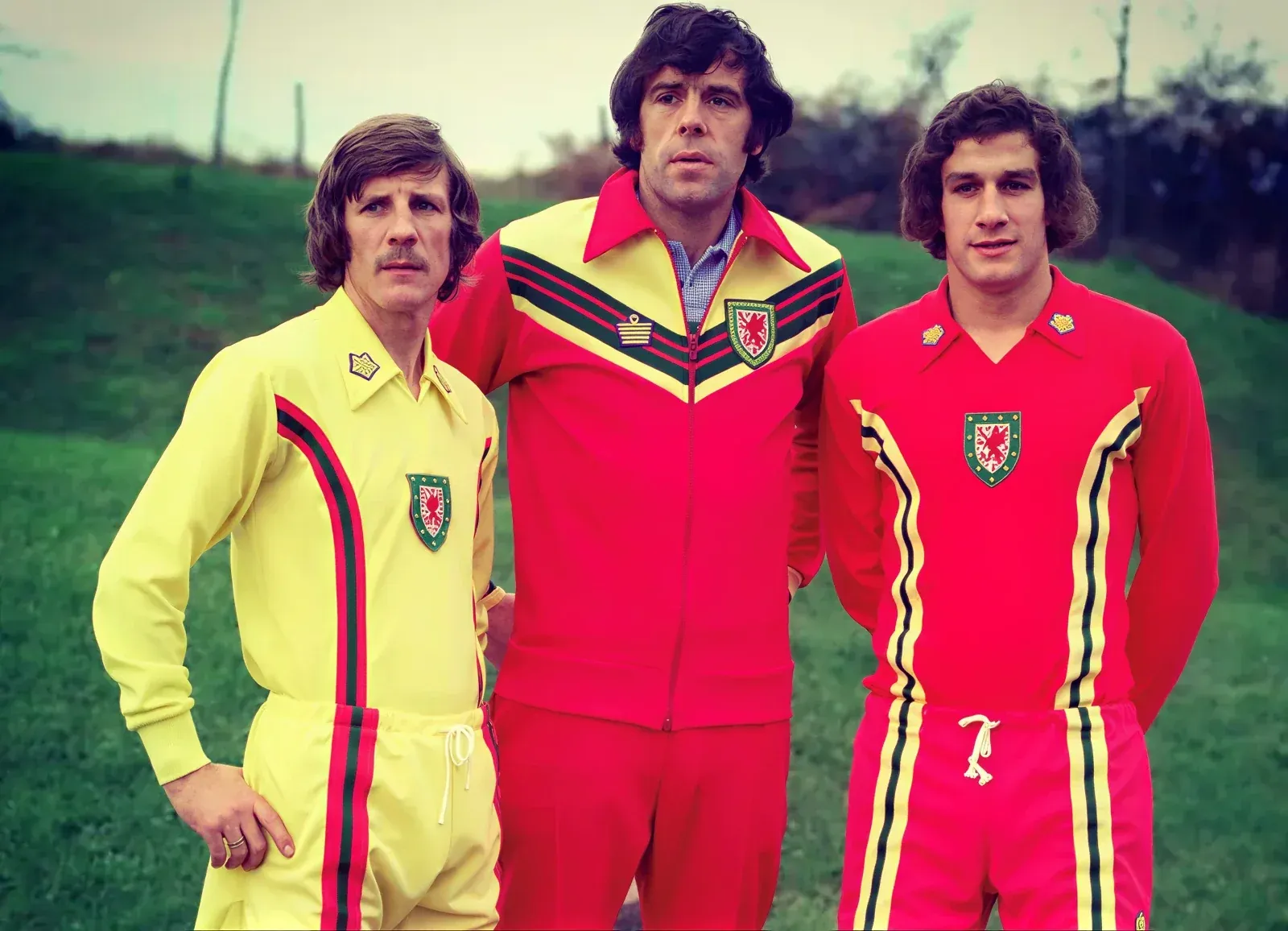
A red shirt with yellow and green "tramlines" curving down each side in an hourglass shape and a large dragon crest. It was one of the most daring international kits of the 1970s, from Admiral, the English brand behind many of the boldest kits of the 1970s. According to historian Martin Johnes, Wales wore this design from 1976 to 1979, a period that included the 1976 European Championship quarter-final. Admiral says it was worn by players such as John Toshack, Leighton James and Joey Jones.
Why it is iconic: it is a time capsule of 1970s football and still one of the most admired Wales shirts. Admiral later reworked the same hourglass idea for Belgium at the 1982 World Cup.
14. Liverpool home, 1993-95 (adidas, Carlsberg)
Red with large white angled panels on the sides and sleeves, a white collar with green trim, and Carlsberg across the chest. It belongs to adidas' "Equipment" era, when the brand's bold three-bar shapes became part of the design. In 1994-95, Liverpool won the League Cup and finished fourth in the Premier League.
Why it is iconic: for a generation of Liverpool supporters who grew up in the 1990s, this is what a Liverpool shirt looks like. Adidas returned as Liverpool's kit maker in 2025, and in March 2026 the two reissued the 1995-96 away shirt, Carlsberg logo included, so many fans hope this home shirt will be next.

15. Rangers home, 1994-96 (adidas, McEwan's Lager)
Royal blue with a tonal pattern that includes the club's crest and its motto "Ready", white three stripes on the sleeves and McEwan's Lager across the chest. Rangers won their seventh and eighth titles of their nine in a row in this shirt, plus the 1996 Scottish Cup, beating Hearts 5-1 in the final.
Why it is iconic: it is simple but classy and represents one of the most successful eras in the club's history.

Honourable mentions
A list of 15 always leaves classics out. These came close:
- England home, 1990 (Umbro): the shirt of Paul Gascoigne's tears in the World Cup semi-final against West Germany.
- Croatia home, 1998 (Lotto): the red and white chequered shirt worn when Croatia, at their first World Cup as an independent country, finished third.
- Mexico, 1998 World Cup (ABA Sport): a design based on the Aztec sun stone, often ranked among the best World Cup kits ever.
- Ajax away, 1989-90: third in FourFourTwo's 2023 ranking, behind only the Netherlands and Denmark.
If you are wondering why so many 1980s and 1990s shirts are here, it is because that period was the peak of experimentation. Designers tried almost everything, and modern football fashion grew out of that chaos. The same is true on the pitch: many of the most iconic football celebrations happened in shirts from this list.
Original or remake? How to tell a genuine retro shirt from a fake
The retro boom has filled the market with official reissues, unofficial "retro style" shirts and fakes. Collector guides from Football Shirt Collective and Classic Football Kit agree on a few practical checks:
- Product codes: shirts from the 1970s, 80s and 90s usually have no product code on the inside label, because codes came later. A "1990" shirt with a modern style code inside is almost certainly a later product. Modern official reissues do have codes you can search.
- Labels: compare the collar and wash labels with photos of a verified original from a trusted seller: wording, details and number of labels. Collector guides say pen or pencil marks on a label are a common sign of a fake.
- Badge and logo: check that the club crest and the maker's logo have the right size, colour, position and stitching quality. Poor, flat embroidery is a warning sign.
- Sponsor print: it should match the original in colour, texture and feel. On a genuine 1995-96 Newcastle away shirt, for example, the Newcastle Brown Ale logo is a flock print with a raised flock border, while fakes often use shiny vinyl.
- Reissue differences: official remakes are rarely identical to the original. Hummel's 2023 Denmark shirt has the collar folding the other way and text-only branding, and the 2026 Manchester United snowflake reissue does not have the original's inner collar label. Knowing these differences helps you tell what you are holding.
- Price and stock: a seller offering a "1980s original" in every size at the same low price is almost certainly selling copies.
Retro football kits in 2026: what came out this year
2026 was a big year for retro designs, helped by the World Cup in North America:
- adidas World Cup away kits with the Trefoil: on 20 March 2026, adidas revealed the away shirts of all its partner federations, including Germany, Argentina, Spain, Italy, Mexico and Japan, with the Trefoil logo on the chest, its return to the World Cup for the first time in 36 years according to SoccerBible. The designs reinterpret classic adidas World Cup patterns.
- adidas World Cup Bringback collection: reissues of Belgium's 1986 home shirt, Germany's 1990 away and 1994 home and away, Japan's 1993 home, Spain's 1994 home and Sweden's 1994 home, on sale by late May 2026, according to Goal.
- Manchester United 1990-92 "snowflake" away: the official adidas and United Bringback collection went on sale on 21 April 2026, built around the blue and white away shirt, with the Trefoil logo.
Quick facts: the 15 kits at a glance
- Netherlands 1988 home: adidas, no sponsor, Euro 88 winners.
- Denmark 1986: Hummel, no sponsor, Mexico 86.
- West Germany 1990 home: adidas, no sponsor, 1990 world champions.
- Arsenal 1991-93 away: adidas, JVC.
- Cameroon 1990 home: adidas, no sponsor, Italia 90 quarter-finalists.
- France 1998 home: adidas, no sponsor, 1998 world champions.
- AC Milan 1989-90 home: Kappa, Mediolanum.
- Napoli 1988-90 home: Ennerre, Mars.
- Barcelona 1991-92 home: Meyba, no sponsor.
- Manchester United 1992-93 away: Umbro, Sharp.
- Newcastle United 1995-96 away: adidas, Newcastle Brown Ale.
- PSG Hechter home: first worn in 1973; in 1991-92 made by Nike with Commodore and Müller.
- Wales 1976-79 home: Admiral.
- Liverpool 1993-95 home: adidas, Carlsberg.
- Rangers 1994-96 home: adidas, McEwan's Lager.
Frequently asked questions about retro football kits
What are the most iconic football kits of all time?
The Netherlands' 1988 home shirt, Denmark's 1986 Hummel shirt and West Germany's 1990 home shirt appear near the top of many rankings, and FourFourTwo put the first two first and second in December 2023. Among club kits, Arsenal's Bruised Banana, AC Milan's Sacchi-era stripes and Maradona's Napoli shirts are the most often mentioned.
What is the best retro football shirt ever?
It is a matter of taste, but if you want one answer, the Netherlands' Euro 1988 adidas shirt is the pick of FourFourTwo's December 2023 ranking, with Denmark's 1986 shirt, which topped the magazine's earlier lists, second.
What is the difference between retro and vintage football shirts?
People often use the words as synonyms. Strictly, a vintage shirt is an original made in its own era, while "retro" can also mean a modern reissue or a new shirt inspired by an old design.
How can you tell if a vintage football shirt is real?
Check the labels against photos of verified originals, look for a product code (pre-2000s shirts usually have none), examine the badge, maker's logo and sponsor print, and be careful with sellers offering old "originals" in every size. Our checklist above goes through each point.
Why was Arsenal's away kit called the Bruised Banana?
Because of its yellow base covered in dark navy and green zigzag shapes, which reminded people of a bruised banana. The nickname started as an insult and became a badge of honour.
Which decade had the best football kits?
Most of the shirts on lists like this one come from the late 1980s and the 1990s, when new printing techniques allowed bold patterns, and kit makers and sponsors became part of the design.
Are retro football kits still being released in 2026?
Yes. In 2026 adidas released World Cup away kits with its Trefoil logo, a World Cup Bringback collection of 1986 to 1994 shirts, and Manchester United's 1990-92 away remake.
Final whistle
Retro football shirts prove that football is about more than goals and trophies. They bring back eras, players and emotions, and they keep being reinvented, from official reissues to new kits that borrow from the old ones. Whether it is Arsenal's Bruised Banana, Liverpool's Carlsberg shirt of the 1990s or the Netherlands' orange masterpiece, these designs live on in wardrobes, on the streets and in our memories.
So the next time you see someone in a retro kit, take a second to think about what story that shirt is telling. Chances are it is not only about football, but about who they were when they first fell in love with the game.