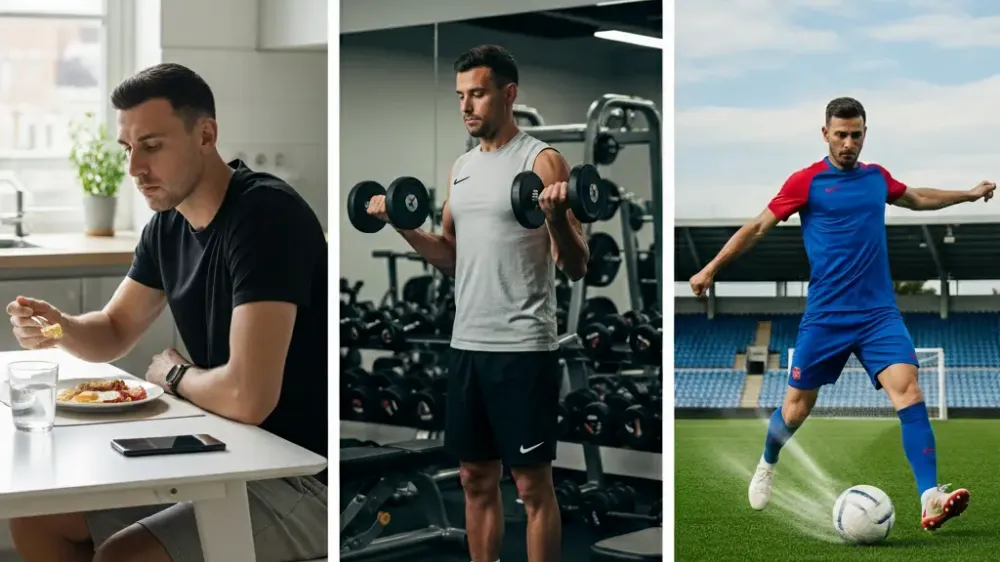
How Pro Footballers Really Eat: Tips for Energy, Performance & Recovery
What footballers really eat for energy, performance & recovery—meal timing, carbs, protein, hydration & supplements that actually work.


Why Fueling Your Body Right Actually Matters
The right food at the right time can be the difference between finishing strong… or cramping up mid-sprint. It affects everything—how fast you recover, how focused you stay in the 90th minute, even how well you sleep after a night game. This isn’t about eating clean for Instagram. It’s about performance you can feel.
Your body constantly asks for support— rebuilding muscle, topping up energy, or calming inflammation after a rough tackle. Miss the timing, skip a meal, or load the wrong stuff too close to kickoff? You’ll know. And so will your hamstrings.
Why Eating Like a Pro Is Harder Than It Looks
Let’s be honest—eating for performance sounds simple. Carbs for energy, protein for muscle, maybe a banana before the match, right? But here’s where it gets tricky: pros don’t just train hard; they train smart, and what they put on their plate is part of the strategy. Food isn’t just fuel—it’s timing, precision, and sometimes, straight-up damage control.
Matches go longer than 90 minutes. There’s warm-up, extra time, recovery, travel, back-to-back fixtures. And in between? They need to stay sharp, fast, injury-free, and mentally locked in. That doesn’t happen on guesswork. It happens with a plan—one that adapts to the game, not just the clock.
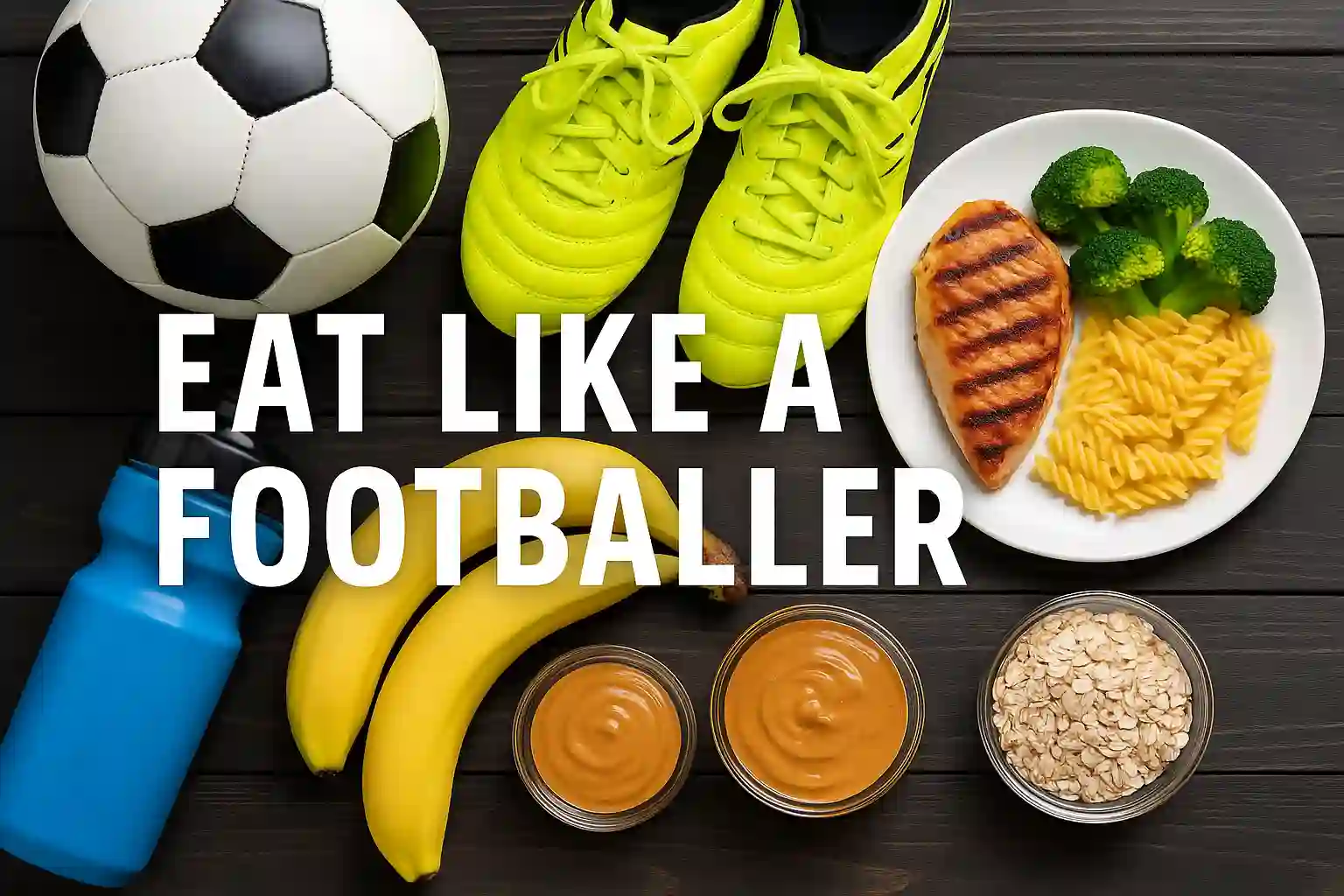
Why Carbs Matter More Than You Think
Carbohydrates are king for high-intensity sport. Players can burn through glycogen stores fast—think 60–90 minutes of repeated sprints, accelerations, decelerations. Without carbs, the brain fog creeps in, decision-making slows, and your hamstrings start whispering, “Not today, pal.”
How much?
- Training day (moderate): \~5–7 g per kg of body weight
- For a 70 kg player, that’s 350–490 g of carbs—about 5 cups cooked rice + 2 bananas + 2 slices bread.
- Heavy match load or double sessions: \~7–10 g/kg (yes, that’s a lot of rice)
- Light recovery day: \~3–5 g/kg
For Weekend Players:
- If you’re training twice a week, aim for 4–5 g/kg of carbs on training days and don’t stress about match-day gels—just bring a banana and water.
Which carbs?
- Slow burners (oats, wholegrain bread, quinoa) earlier in the day
- Fast burners (white rice, potatoes, fruit, sports drinks) closer to kick-off or during half-time
You know what? Even the “white carbs are bad” crowd hush up on match day. Ease of digestion matters more than rustic charm when the whistle’s about to go.
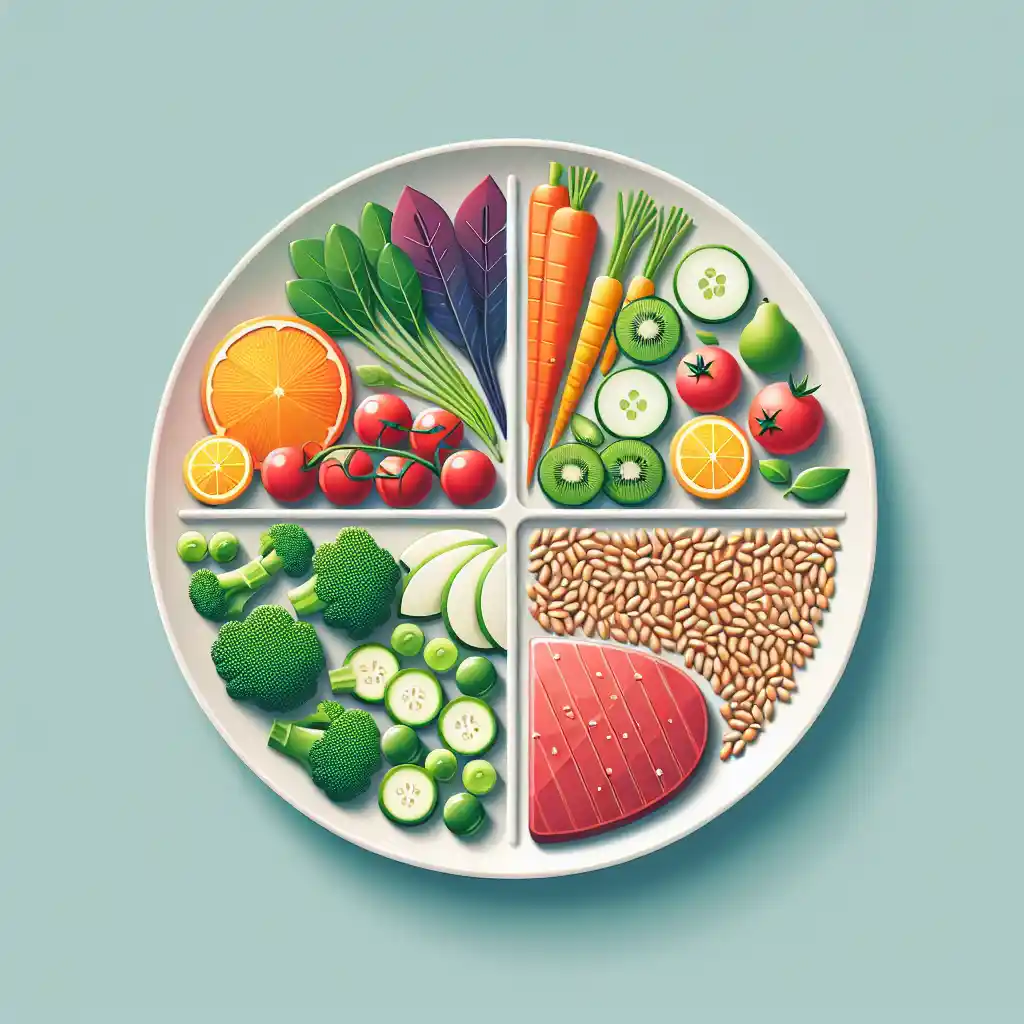
Protein: not just for the gym selfies
Protein repairs muscle, but also helps immune function and basic upkeep. Footballers aren’t bodybuilders, yet they still need steady protein spread through the day.
- Ballpark numbers: 1.6–2.2 g/kg body weight per day.
- Split it into 4–5 meals/snacks: \~0.3–0.4 g/kg each time. That could be 25–35 g per sitting for many players.
Best timing points:
- Breakfast (start the repair early)
- Post-session (the famous “window” is flexible, but within a couple of hours is fine)
- Pre-bed (a slow casein hit—think cottage cheese or Greek yogurt—can aid overnight recovery)
And yes, plant proteins can work, just mix sources (lentils + soy + whole grains) to cover all amino acids and bump the total a little.
Fats: the quiet workhorse
Fat isn’t the villain. It helps with hormone production, joint health, and long-haul energy. But high-fat meals right before a match? Risky—sluggish digestion, heaviness.
- Rule of thumb: 20–30% of total daily calories from fat, heavier earlier in the day or on rest days.
- Focus on: olive oil, nuts, seeds, avocado, oily fish. Keep fried, greasy stuff for… never? Okay, rarely.
Hydration: sweat rates, sodium, and the pee test
Dehydration of even 2% body weight can chip away at sprint speed and concentration. Yet some players barely sip until half-time. Don’t be that player.
Simple checks:
- Urine color: pale straw is the target
- Weigh-ins: weigh before and after training to see how much you lose. Every kilo lost = roughly 1 litre of fluid to replace
Electrolytes matter: Sweat carries sodium. Plain water might not cut it if you’re a salty sweater (white marks on your shirt? That’s you). Sports drinks, electrolyte tabs, or a pinch of salt in diluted juice can help.
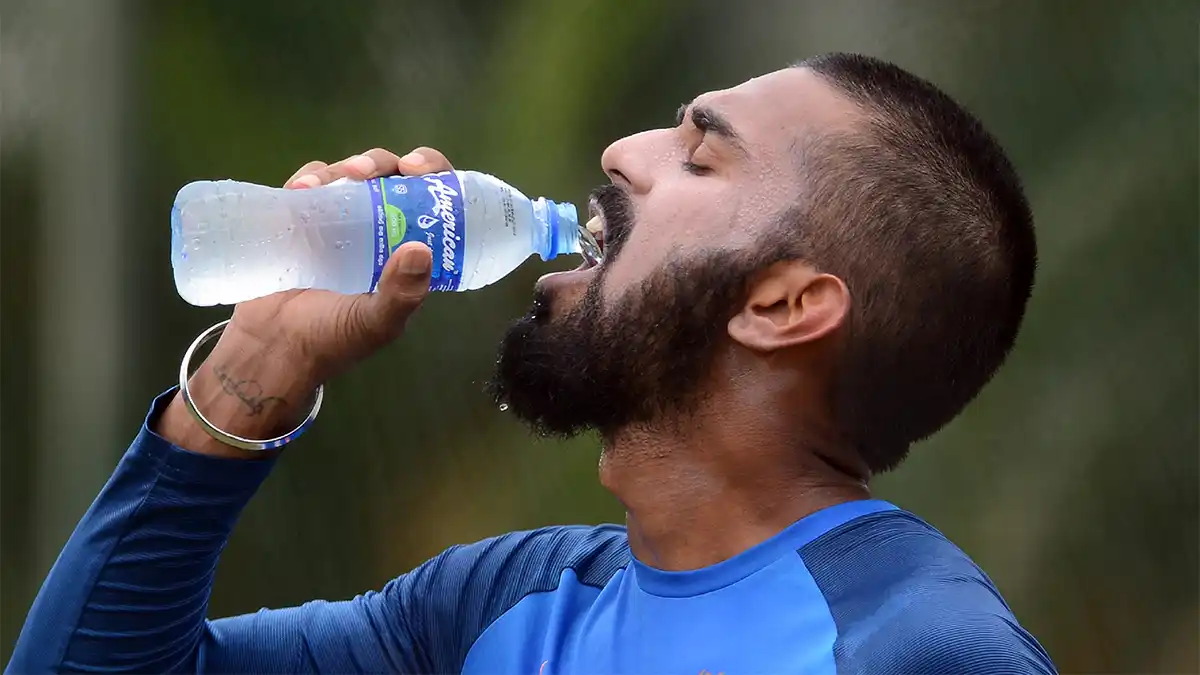
Match-day plate: the timeline trick
Here’s a practical rhythm many pros (and smart amateurs) use. Adjust portions to your size and level.
24 hours before kick-off
- Carbs go up. It’s “topping off the tank” day. Pasta, rice, potatoes, bread, fruit.
- Keep fiber moderate. No need to overload gut with raw veggies right now.
- Hydrate steadily—don’t chug a liter at bedtime.
Pre-match meal (3–4 hours before)
- 1–4 g carbs/kg depending on how close you are and your tolerance
- Moderate lean protein (chicken, tofu, fish)
- Low fat, low fiber
- Example: white rice bowl with chicken and a small side of cooked veg; or pancakes with honey and yogurt.
Snack (60–90 minutes out)
- Quick carb top-up: banana, small energy bar, rice cake with jam
- 200–400 ml of fluid if needed
Half-time
- Carb gel or a few sips of a sports drink (20–30 g carbs)
- Maybe a small bite of something you’ve tested before (jelly sweets, chewy blocks)
Post-match (0–2 hours)
- Aim: 1–1.2 g carbs/kg + 20–40 g protein
- Chocolate milk, recovery shakes, or actual food—doesn’t matter as long as it’s quick and you’ll actually consume it.
Later that evening
- A proper meal: carbs + protein + colorful veg + healthy fats
- Rehydrate—think fluids + electrolytes until your weight and pee are back to normal.
Footballer Supplements: What’s Worth It (and What’s Just Hype)
Plenty of noise here. Let’s keep it grounded.
Commonly used (with solid evidence):
- Creatine monohydrate (3–5 g/day): helpful for repeated sprints and strength maintenance
- Caffeine (\~3 mg/kg taken 45–60 min pre-match): sharper focus, lower perceived effort—test in training first
- Nitrate-rich foods (beetroot juice shots \~2–3 hours pre-kick): may aid endurance and efficiency
- Vitamin D (if deficient): bone health, immunity
- Beta-alanine (3–6 g/day, split doses): buffers acid, useful in high-intensity bursts—some get tingles
Stuff to be cautious about:
- Random “testosterone boosters” (usually rubbish)
- Herbal blends with no third-party testing—risks of contamination are real
- Anything you haven’t trialed in a training environment. Match day is not the lab.
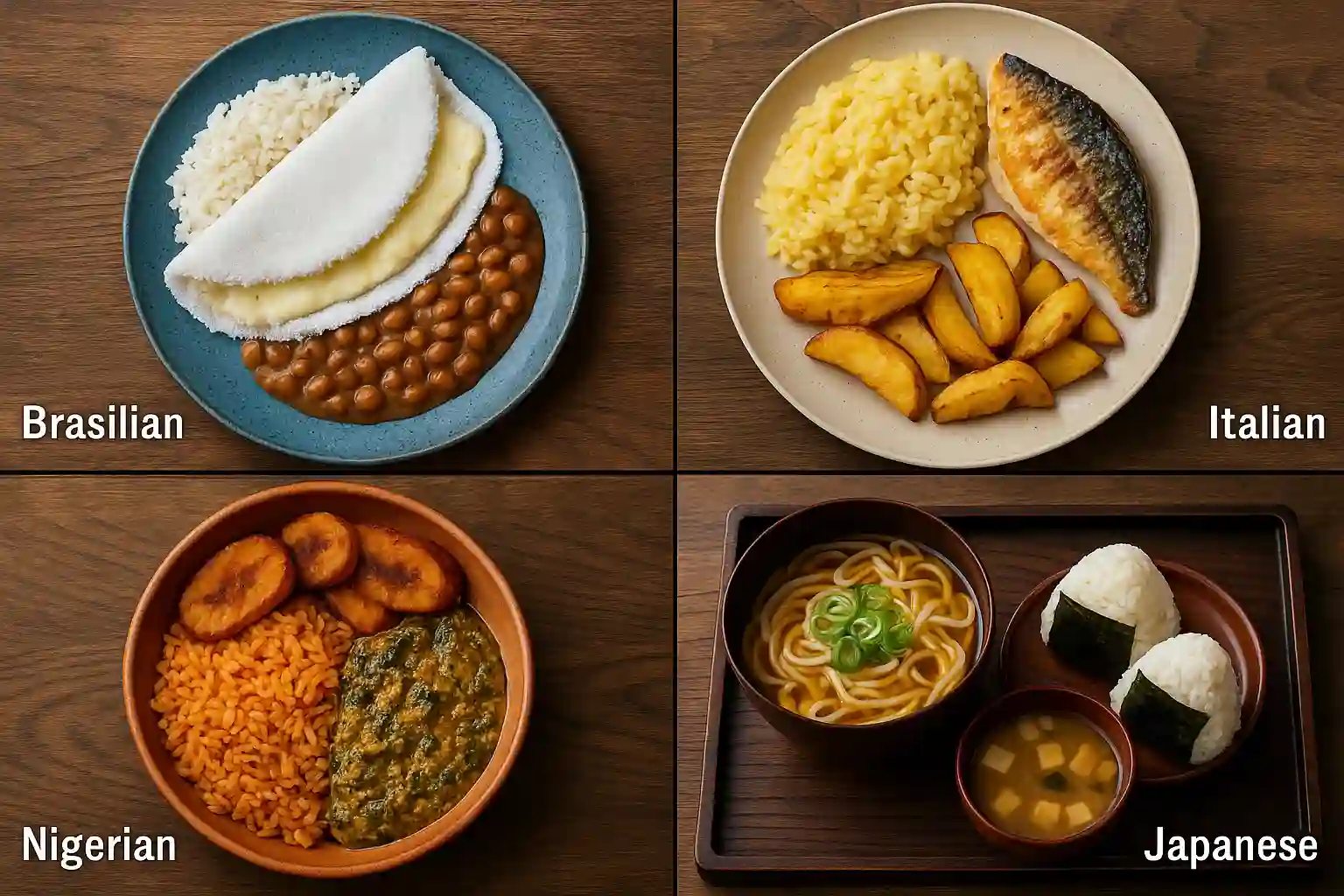
Food is culture: plates from around the world
Football is global. Diets should respect taste, culture, and what the stomach agrees with.
Brazilian player’s day: Tapioca crepes with cheese for breakfast, beans and rice at lunch, açaí with granola as a snack
Italian midfielder: Morning espresso, bowl of risotto before a late kick-off, grilled fish and roasted potatoes after
Nigerian winger: Jollof rice for glycogen loading, plantain for quick carbs, egusi soup later for recovery
Japanese full-back: Big bowl of udon noodles pre-game, onigiri (rice balls) as a portable snack, miso soup post-match to hydrate and add salt
See the pattern? Carbs featured, proteins supported, fats present but not dominant pre-game. The wrapping paper changes; the gift inside is similar.
A “copy-paste” sample day (training at 11:00, match-like session)
Adjust quantities to your body weight.
7:30 – Breakfast
- Porridge cooked with milk, topped with banana and a drizzle of honey
- 2 boiled eggs
- Glass of water + pinch of salt or electrolyte tab
9:30 – Pre-session snack
- Slice of sourdough with jam
- Small yogurt
- 300 ml isotonic drink
11:00–12:30 – Training
- Sip sports drink (30–60 g carbs over the session) if intense
- Water as needed
12:45 – Immediate recovery
- Chocolate milk (500 ml) or a whey + fruit smoothie
14:00 – Lunch
- Chicken burrito bowl: white rice, black beans, grilled chicken, salsa, a little cheese
- Fruit salad on the side
17:00 – Snack
- Rice cakes with peanut butter and honey
- Handful of berries
- Water or herbal tea
20:00 – Dinner
- Salmon fillet, roasted sweet potato, steamed greens
- Wholegrain roll
- Yogurt with berries if hungry later
Before bed (optional)
- Cottage cheese with pineapple, or a casein shake.
Mistakes pros still make
- Waiting until thirsty: thirst lags behind need
- Carb-phobia: going low-carb before a match, then wondering why legs feel heavy by minute 70
- New foods on match day: that trendy energy bar you found on Instagram? Save it for Tuesday training, not the final
- Overdoing fiber right before kickoff: crunchy salads are great… after the game
- Skimping on recovery meals: celebration is fine—just get a proper feed in first
- Relying only on supplements: they fill gaps; they’re not the base of the pyramid.
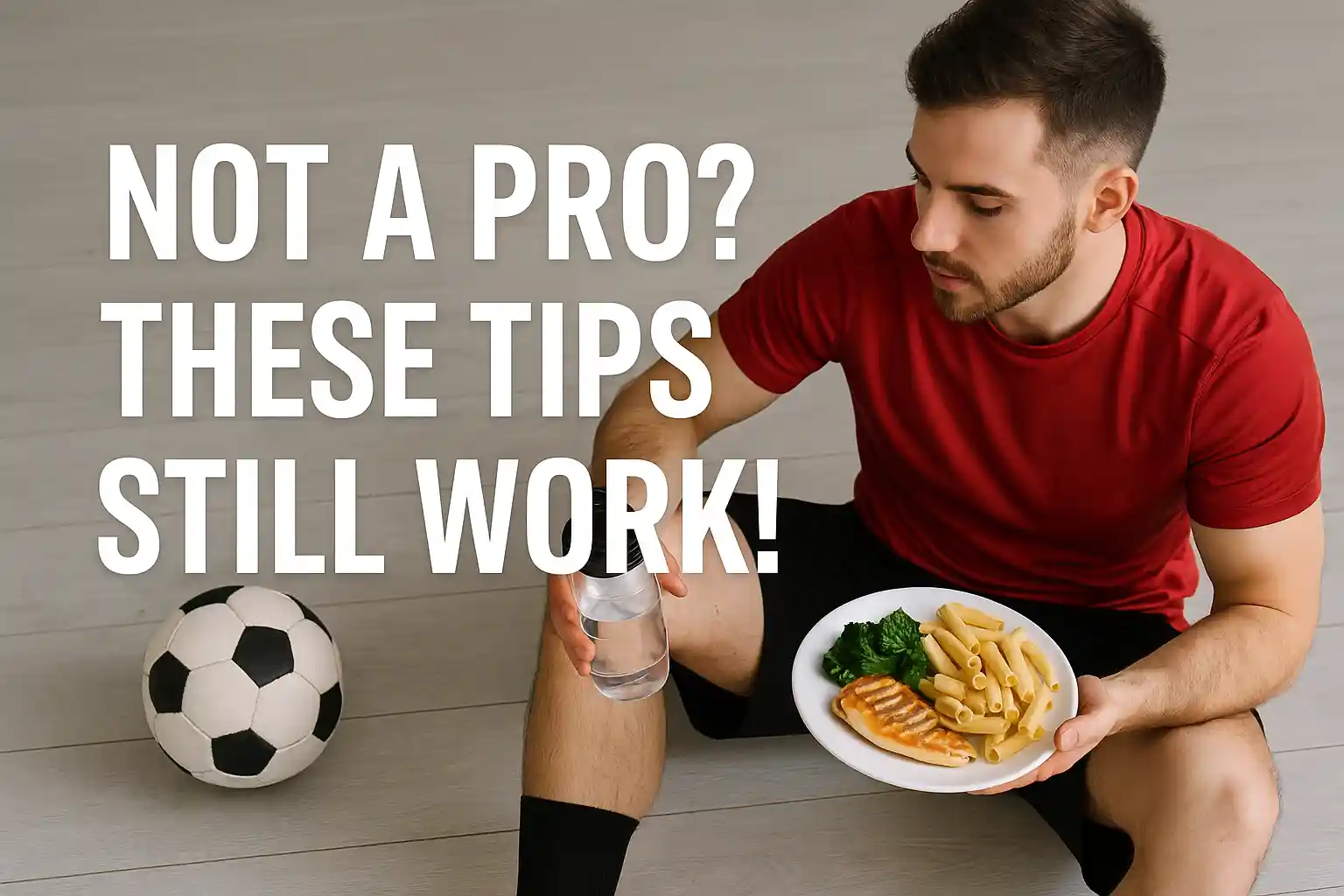
“I’m not a pro—does this still matter?”
Totally. You might not have club chefs or blood tests every month, but the principles scale. You train hard? You sweat? You want to feel sharp late in a game of five-a-side? Same basic framework:
- Carbs before hard sessions
- Protein evenly through the day
- Fluids + electrolytes when you sweat a lot
- Fast carbs right after intense play
- Real food most of the time; smart supplements if needed
Even if your “match” is a Sunday league game and a pint after, a decent pre-match meal still helps you enjoy the pint more because you won’t be wrecked.
Mini step-by-step guide (stick this on your fridge)
1. Check your calendar: hard day or light day? Adjust carbs up or down.
2. Plan your pre-game meal: 3–4 hours out, low fat, low fiber, decent carbs, some protein.
3. Snack smart: small carb hit 60–90 min before.
4. Hydrate on purpose: start the day with fluids, weigh yourself if you’re serious, sip during play.
5. Hit recovery fast: carbs + protein within two hours—shake, chocolate milk, or a full plate.
6. Sleep fed, not stuffed: a small protein-rich snack before bed helps repair without bloating you.
Key takeaways
- Carbs drive intensity; eat more on heavy days, less on light ones.
- Protein isn’t once-a-day—spread it out.
- Hydration is strategy, not guesswork.
- Match day is about timing: big meal 3–4 hours out, quick top-ups closer to kick-off and at half-time.
- Supplements can help, but only the tried-and-tested ones—and only after real food is sorted.
- Culture shapes plates, but the performance principles don’t change.
- Weekend players benefit too—just scale portions to your life.
You don’t need a chef to eat like a pro. You just need a plan, a little consistency, and the willingness to eat that extra bowl of rice the night before. Honestly, your legs will thank you in stoppage time.