Petr Cech Head Injury: Why Did He Wear a Helmet?
A knee fractured Petr Cech's skull at Reading on 14 October 2006. What happened, why he wore a headguard until 2019, what changed and his life in 2026.

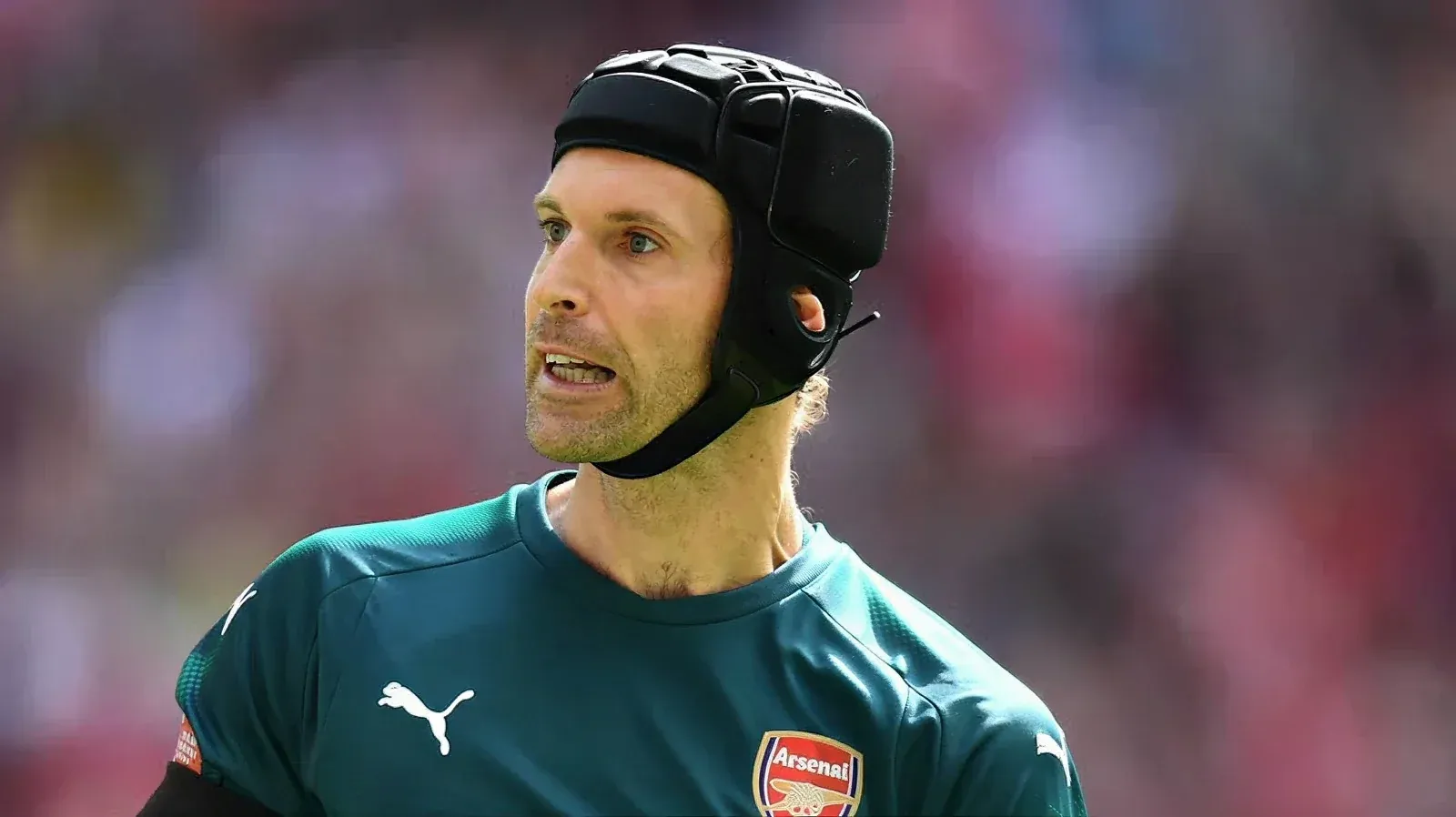
Petr Čech wore a padded headguard for the rest of his career because of a depressed skull fracture he suffered on 14 October 2006, in the first minute of Chelsea's match at Reading, when Reading's Stephen Hunt struck his head with a knee. Doctors later said the injury nearly cost him his life. He returned three months later, in January 2007, and kept the headguard on until he retired in 2019.
Čech is 44 (born 20 May 1982) and, as of November 2026, no longer works for Chelsea: his advisory role at the club ended in 2022. In October 2026 he marked the 20th anniversary of the injury with a social media message thanking the doctors who treated him. This article sets out what happened that day, what is known about the medical side, how the headguard came about, what changed in English football afterwards and what Čech does now.
What happened to Petr Čech on 14 October 2006?
Chelsea went to the Madejski Stadium to play newly promoted Reading. Within the first minute, Čech came out to collect a ball and Hunt's right knee hit him on the head. Čech was treated on the pitch for several minutes and taken off; Carlo Cudicini replaced him.
Late in the game Cudicini was himself knocked down in a collision with Reading's Ibrahima Sonko and also went to hospital, so Chelsea captain John Terry finished the match in goal. Chelsea won 1-0, through an own goal by Reading's Ívar Ingimarsson.
Who fractured Čech's skull?
Stephen Hunt, then a Reading midfielder. Hunt said he was focused on winning the ball, did not mean to cause any harm and wished Čech a full recovery (AFP, 15 October 2006). Reading manager Steve Coppell insisted that Hunt was not a dirty player. José Mourinho, Chelsea's manager, called the challenge "a disgrace" and said Čech was lucky to be alive (Reuters, 15 October 2006). The Football Association confirmed on 19 October 2006 that no action would be taken against Hunt, according to English Wikipedia's article on Hunt. That article also says that Hunt and Sonko reportedly received death threats from Chelsea fans, which Chelsea condemned.
We could not find a time when Čech accused Hunt of intent. In January 2007 he told The Sun, as reported by The Irish Times, that he did not know whether the challenge was deliberate and was not interested in finding out. He said that the only contact he had had from Hunt was a letter of apology from Reading in October, signed by the player. In his October 2026 message, reported by Goal and by All Out Soccer on Yahoo Sports, Čech said that the two embraced at a later match at Stamford Bridge and agreed not to talk about it too much: "we keep the word."
What were the medical facts?
The following comes from interviews with Čech and from outlets that reported them. We give no medical detail beyond that.
- Diagnosis: a depressed skull fracture. In a Sky Sports interview published on 29 October 2016, Čech said: "A few pieces of bone went in quite deep, that was the biggest danger."
- Treatment: he was transferred the same evening to a neurosurgical unit in Oxford, where he had emergency surgery at around 1am, according to Sky Sports. The 2026 coverage names the Radcliffe Infirmary; in his own message Čech thanked the Radcliffe Hospital in Oxford. Sky Sports reported that two metal plates were fitted.
- Survival: Čech credited the Chelsea doctor, Bryan English, the rest of the medical staff and "the proximity of Oxford" for giving him a chance (Sky Sports, 2016). English Wikipedia and Flashscore both report that doctors later said the injury nearly cost him his life.
- Memory: he has said that he cannot remember the injury, and in 2016 told Sky Sports that he lost the next three days as well.
- Hospital stay: he went home on 24 October 2006, ten days after the injury, according to English Wikipedia.
Early reports were less alarming than what followed. Al Jazeera's report of 15 October 2006 said staff had diagnosed "mild concussion" and that his condition was thought to have worsened on the way to hospital.
Why did Čech wear a helmet?
The doctors allowed him to play only if he protected the weakened area of his skull. Chelsea said he would be out for three months, in line with medical advice, and he came back at Liverpool on 20 January 2007, a 2-0 defeat, wearing a rugby-style headguard.
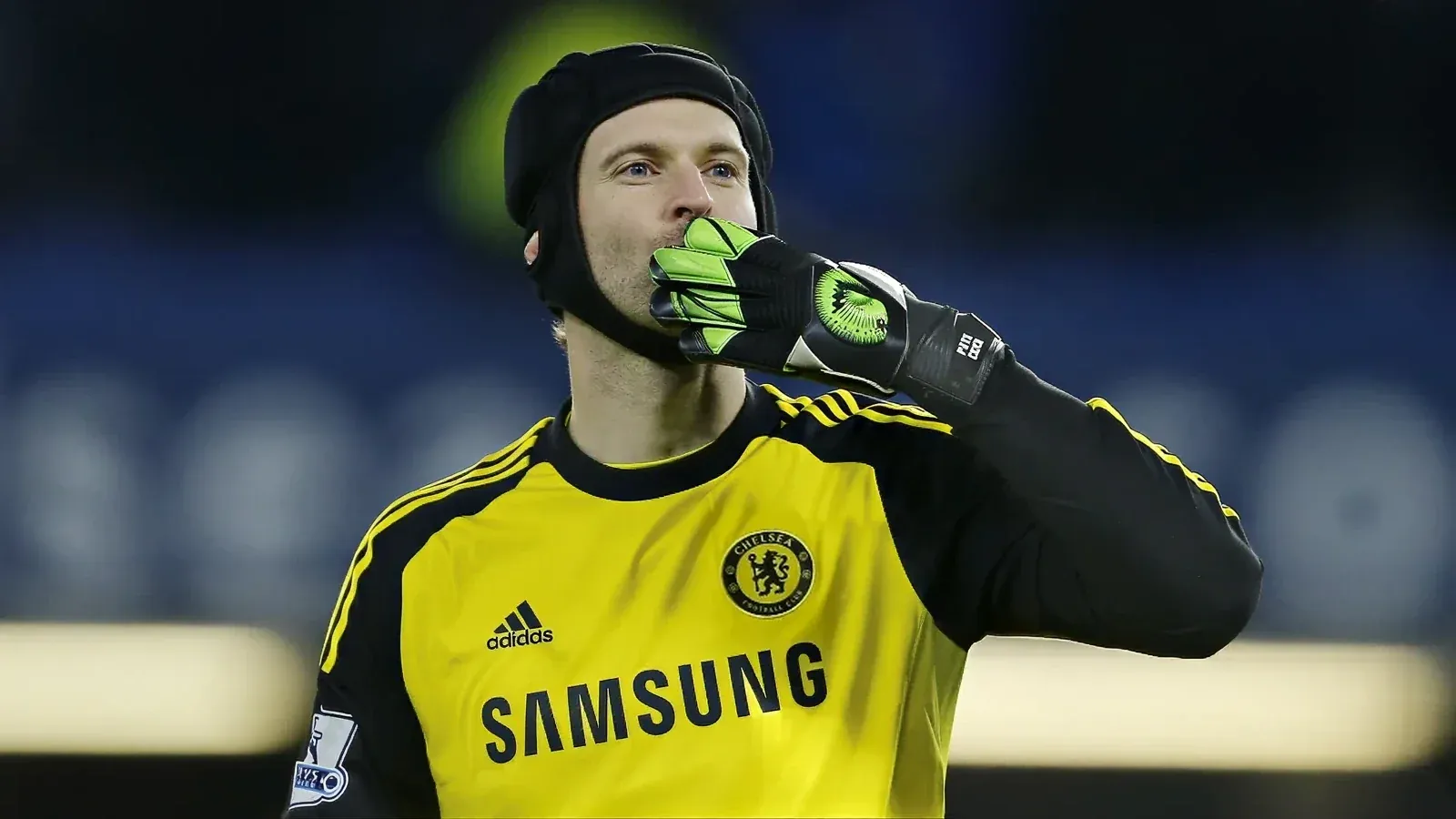
The headguard was designed by Canterbury, the New Zealand company known for rugby equipment. The Irish Times reported on 19 January 2007 that Chelsea's medical department had commissioned a custom version of the scrum cap he had been wearing in training, with extra protection over the parts of his skull weakened by the collision, shipped from New Zealand in time for the Liverpool game. The Canterbury logo caused friction with Chelsea's kit maker Adidas and the Czech national team's sponsor Puma, according to English Wikipedia. The sources disagree on the follow-up: English Wikipedia says Adidas made the headgear for club matches, while Flashscore says Puma did. Both say that for the Czech team he wore a version without a logo.
What Čech has said about it:
- On fear: some people read the headguard as a sign that he was scared. Čech told Sky Sports in 2016: "How can I be afraid when I can't remember anything?" Flashscore, for its part, reports that he later admitted to a fear of tackles after coming back.
- On the comeback: "It was my decision and my will to come back to what I was used to doing and what I love" (Sky Sports, 2016).
- On wearing it: in a 2015 interview with the Czech magazine Týden, relayed by TNT Sports, he said that he would feel more confident without it, that it covers his ears and makes hearing worse, and that "the doctor has forbidden me to take it off." He also said: "Even with the helmet, I've been concussed twice."
English Wikipedia says that he wore the headguard for the rest of his career. After his return he kept goal for 817 minutes in the Premier League without conceding, and he was named Premier League Player of the Month in April 2007 after eight consecutive league clean sheets (Flashscore).
What changed in English football afterwards?
The match prompted a review of how serious injuries are handled at Premier League grounds. English Wikipedia says that Mourinho criticised the ambulance service and referee Mike Riley after the match, and Flashscore reports that Riley was later criticised for reacting slowly.
In its 2016 interview, Sky Sports said that clubs must now have a doctor in the dugout, two paramedics on the sidelines and an ambulance on standby at each stadium. Čech said in the same interview: "Now the ambulance is always ready, the paramedics are always ready, people in the crowd can get help without risk." We could not find the Premier League's own wording of these rules, so we give them as Sky Sports reported them.
The measures were mentioned again in March 2012, when Bolton's Fabrice Muamba collapsed during an FA Cup match. Premier League chief executive Richard Scudamore said that Muamba might owe his life to measures "a lot of us put in place after what happened with Petr Cech" (Al Jazeera, 20 March 2012). In his October 2026 message Čech wrote that "the Premier League changed the rules around the player's medical safety."
Petr Čech on the injury, in his own words
- 2007, The Irish Times (comments to The Sun): "I know I am not risking my life by playing again, and that is the main thing."
- 2016, Sky Sports: "I had a depressed skull fracture." He added that his wife was affected more than he was: "For her, the experience was a thousand times worse than it was for me." His wife at the time was Martina Čechová, whom he married in 2003 and from whom he announced a separation in August 2025.
- October 2026, social media message reported by Goal: "The recovery was hard at the beginning and I had big doubts sometimes." He thanked the medical teams "for giving me the chance to live and allowing me to carry on playing the game I loved", and, according to All Out Soccer, said that the most precious part was that he later became a father.
Who is Petr Čech? Career timeline
- 1982: born on 20 May in Plzeň, then Czechoslovakia.
- 2004: Chelsea agree a £7 million fee in February; he joins on a five-year contract from July.
- 14 October 2006: the skull fracture at Reading.
- 20 January 2007: returns at Liverpool in the headguard.
- 2004 to 2015: with Chelsea he wins four Premier League titles, four FA Cups, three League Cups, the Champions League and the Europa League, in 494 appearances (English Wikipedia).
- 29 June 2015: joins Arsenal on a four-year deal for a reported £10 million. He wins the FA Cup (2017) and two Community Shields (2015 and 2017).
- 8 July 2016: retires from the Czech national team after 124 caps, still the national record.
- 15 January 2019: announces that he will retire at the end of the season. His last match is the Europa League final on 29 May 2019, a 4-1 defeat to Chelsea.
- June 2019: returns to Chelsea as technical and performance advisor.
- October 2019: signs for the ice hockey club Guildford Phoenix.
- June 2022: leaves his Chelsea role after Todd Boehly's takeover of the club.
He holds the Premier League record of 202 clean sheets and was the first goalkeeper to reach 200 (11 March 2018). He has won the Premier League Golden Glove four times, with two different clubs.
What does Petr Čech do in 2026?
- Television: he is the author and presenter of Big Pete, a series of interviews made by CANAL+ and Livesport. It premiered on 2 March 2026 on CANAL+ Sport, in two series of six episodes of about 30 minutes, with guests including John Terry, Ashley Cole, Robert Pirès, Emile Heskey and Aaron Lennon (Mediaguru, 4 March 2026).
- Ice hockey: his latest club is the Haringey Huskies in NIHL 2 South. England Ice Hockey reported on 5 December 2025 that the Huskies had completed his signing and that he would join their line-up once international clearance was granted (englandicehockey.com). Before that he played for Guildford, Chelmsford and Oxford City Stars and had loans at the Belfast Giants, according to English Wikipedia.
- Brain health: in his October 2026 message he described cognitive brain training and breathing exercises, according to Goal.
We did not find a coaching job or a role at a football club for him in November 2026. If you have read that he is still at Chelsea, that information is out of date.
The video above is the trailer for Big Pete, published by CANAL+ Nederland.
Čech's Chelsea years also feature in our articles about teammates' families: John Terry's wife Toni and Frank Lampard's wife Christine.
Quick facts
- Date of injury: 14 October 2006, first minute, Reading v Chelsea at the Madejski Stadium, 0-1.
- Injury: depressed skull fracture.
- Age then and now: 24 in 2006, 44 in November 2026.
- Return: 20 January 2007, Liverpool 2, Chelsea 0.
- Headguard: custom Canterbury scrum cap, worn until retirement in 2019.
- Hunt's punishment: none from the FA (decision of 19 October 2006).
FAQ
Why did Petr Čech wear a helmet?
He had a depressed skull fracture at Reading on 14 October 2006, and he was allowed to return to play only with a padded headguard protecting the area. He wore it until he retired in 2019.
Who injured Petr Čech?
Reading's Stephen Hunt, whose right knee hit Čech's head in the first minute of the match. Hunt said that he had no intention of hurting him, and the FA took no action.
Did Petr Čech nearly die?
English Wikipedia and Flashscore both report that doctors later said the injury nearly cost him his life. Čech himself says that the decisions of the medical staff and the closeness of the Oxford hospital gave him a chance.
How long was Petr Čech out after the head injury?
Chelsea said he would be out for three months. He went home from hospital after ten days and returned on 20 January 2007, about three months after the injury.
Does Petr Čech remember the injury?
No. He has said that he has no memory of it, and in 2016 told Sky Sports that the next three days are also lost.
Did the Premier League change its rules after Čech's injury?
Sky Sports and Čech himself say that medical cover was tightened: a doctor in the dugout, two paramedics on the sidelines and an ambulance on standby. Scudamore linked the changes to the Muamba case in 2012. We could not find the league's own text of the rules.
Is Petr Čech still at Chelsea?
No. He worked at the club as technical and performance advisor from June 2019 and left in June 2022.
What does Petr Čech do now?
As of November 2026 he presents the interview series Big Pete, and his latest ice hockey club is the Haringey Huskies, who signed him in December 2025. He retired from football in 2019.